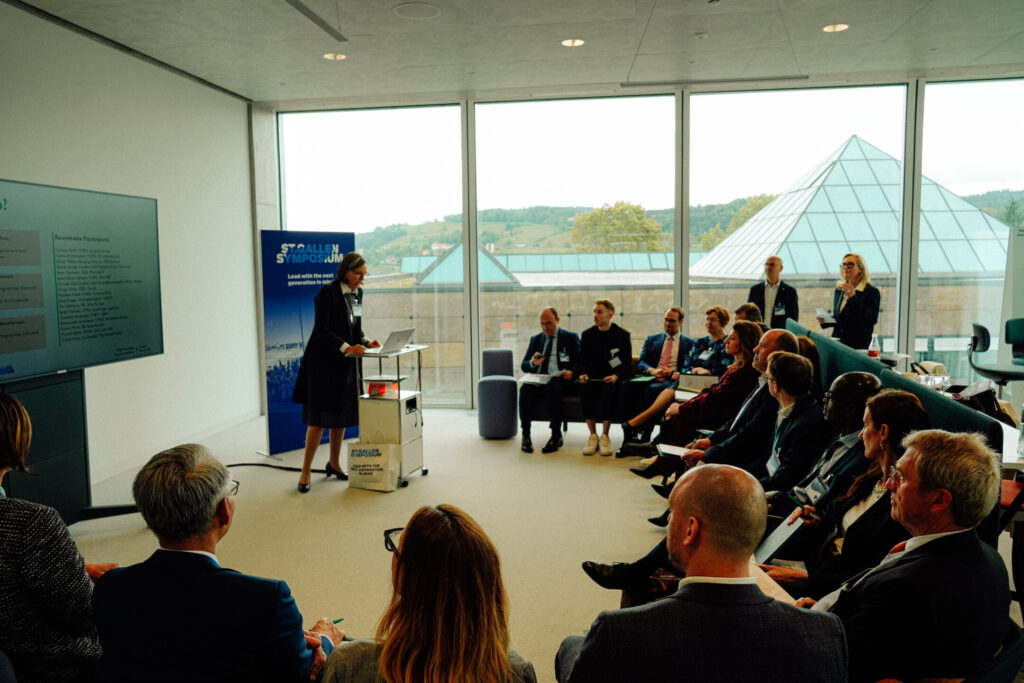
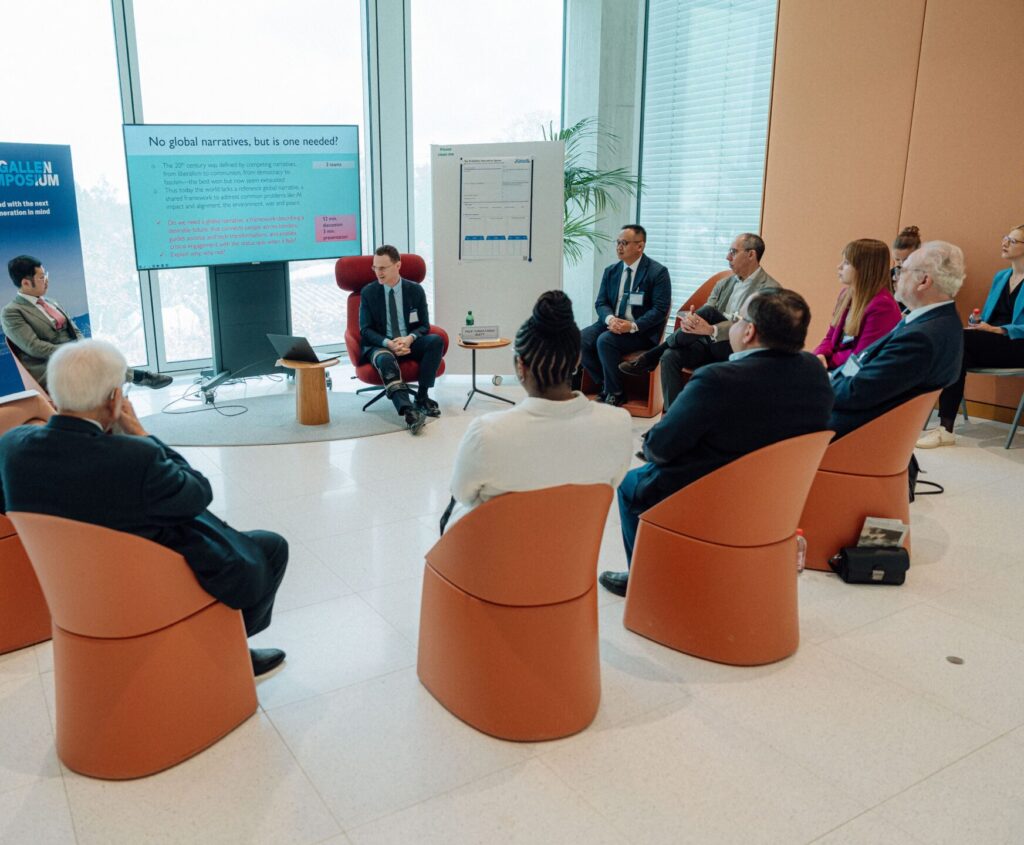
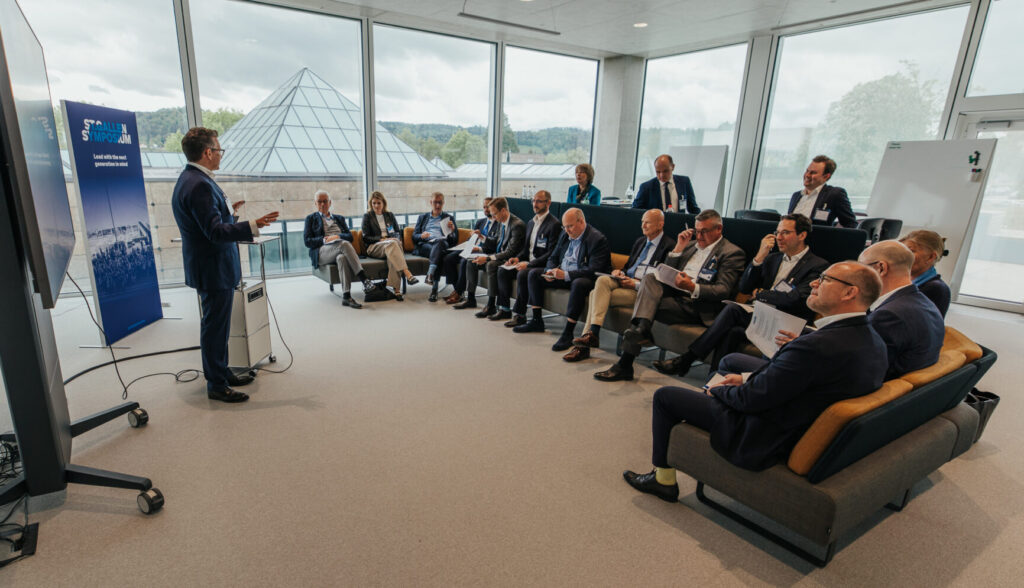
10 Break-Out Sessions
[timetable id="9" column_title="0" filter_visible="1" filter_multiple="1" event_box_time="0"]


Genesis provided luxury limousines for the individual shuttle Hyundai, a fleet of a full battery, hybrid or hydrogen-powered vehicles. ABB installed the necessary infrastructure to charge the electric cars on the University of St. Gallen grounds. Partnership with SBB and VBSG, the national railway and public transport service provider of St. Gallen, respectively, have offered an environmentally friendly alternative to individual transport. The SBB offered all participants a 1st class SBB train ticket and VBSG a dedicated bus-shuttle service in the city of St. Gallen.
Thanks to this multi-modal concept, the CO2 emissions of the vehicle fleet operated by the 51st St. Gallen Symposium were per participant by 88.3% lower than by the one used by the 49th St. Gallen Symposium in 2019 (the last Symposium held fully physically before the COVID-19 pandemic outbreak). Specifically, the CO2 emissions amounted to 2.0 kg per person in 2022 compared to 17.3 kg in 2019. Overall, the vehicle fleet of the 51st St. Gallen Symposium caused only 2.68t of CO2, representing a decrease of 71.8% compared to 2019. Additionally, the share of electric vehicles in the fleet in 2022 rose by another 7.4% compared to the previous year, amounting to 78.7%. At the same time, the quality of the transport remained very high. Participants expressed high satisfaction with the provided service and the ability to choose between different mobility options.
The change in participants’ awareness, who increasingly prefer public and rail transport solutions, was also part of the success of this new concept. The proportion of people who opted for the offered SBB train ticket rose by 64% compared to the last year; 45.3% of all participants of this year’s Symposium travelled to St. Gallen by train. In the wake of this trend, we see the potential for partnerships with foreign railway companies. At the same time, we are examining models in which our guests will be accompanied by students of the University of St. Gallen on their train journey to St. Gallen to promote intergenerational dialogue alongside the private shuttle service by car outside of the event itself.
Read the complete publication on “Next Generation Conference Mobility” here.
Thank you for this well-structured and insightful post. It’s evident that you have a thorough understanding of the topic, and your explanations are clear and concise. Keep up the great work!