10 Break-Out Sessions
[timetable id="9" column_title="0" filter_visible="1" filter_multiple="1" event_box_time="0"]
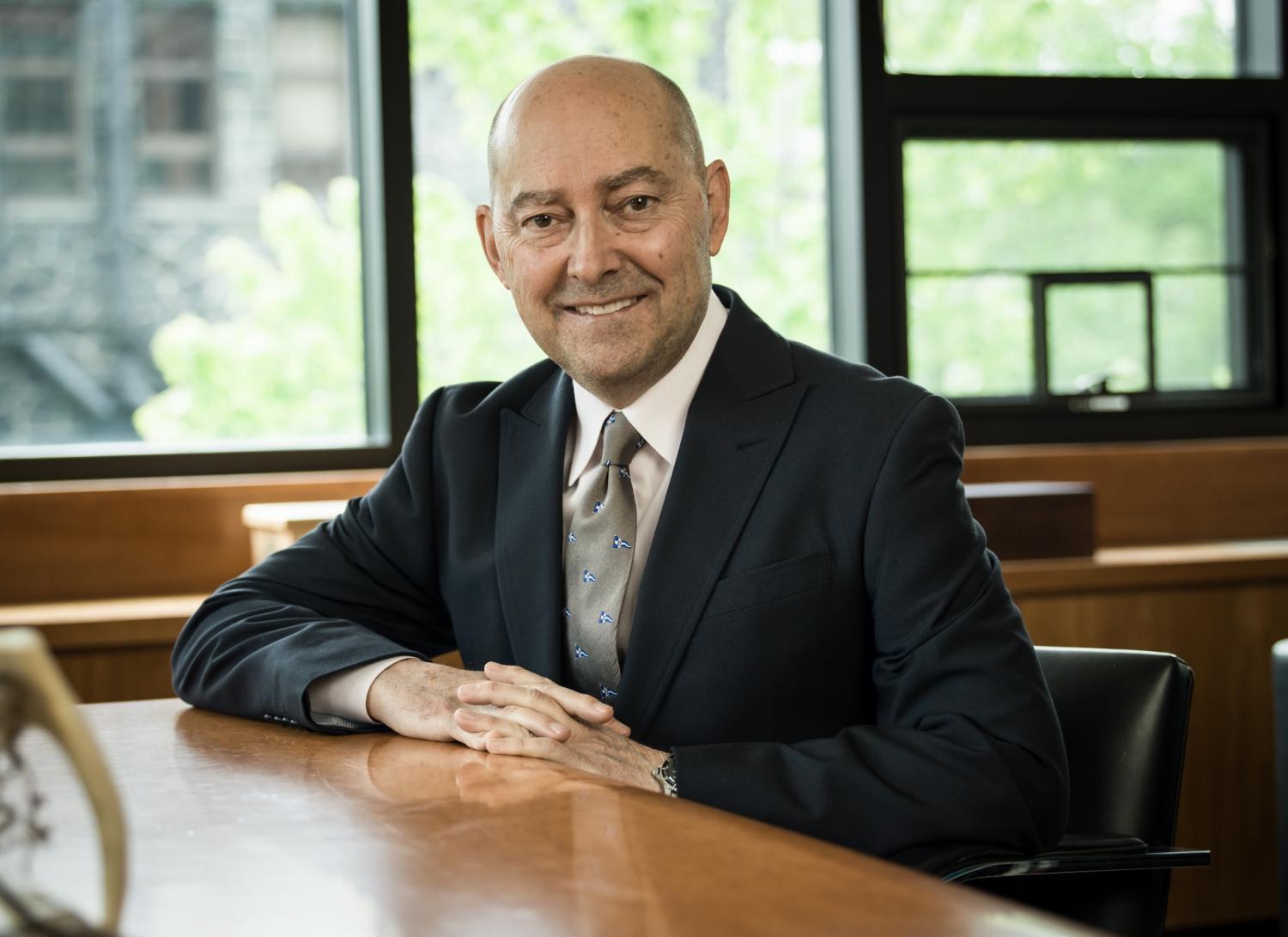
In an exclusive cross-generational conversation, Leader of Tomorrow Grégoire Roos talks to Admiral James G. Stavridis, a retired 4-star general officer in the U.S. Navy and former Supreme Allied Commander of NATO, now an Operating Executive at The Carlyle Group, about the role of trust in international affairs, his foreign policy expectations for a Biden presidency, and the prospects and limitations of “smart power” at a time of resurging great powers competition.
This is the first part of this interview. You can find the second part here.
Grégoire Roos: Starting with a somewhat very unoriginal question… What can America’s allies, and Europe in particular, expect from the next US administration under President Biden? Trust between the two shores of the Atlantic seems to have suffered significantly lately…
James Stavridis: The first change to expect is atmospheric but nonetheless important: it is simply the tone of the conversation. I think you will immediately begin to hear from the Biden foreign policy team and the President-elect himself a sense that our allies matter, that we respect them, and that we want to work with them. So first of all, you’ll hear a much more collegial tone. Secondly, as there will need to be actions to go along with deeds, I believe you’ll see the US send its top leadership towards NATO: you’ll see a new US ambassador to NATO and overtime a series of very high-ranking military officials. You’ll see a new Secretary of State committed to working more closely with Europe. And I think you’ll see all these people coming and spending time with our European colleagues, because there will be a keen appreciation in the Biden Administration that our greatest pool of partners in the world is in Europe: NATO, the EU, and nations that are long-time friends and partners of the US although not members of either of those organisations, like Switzerland.
That basket of European nations strongly shares our values. And you will therefore see concrete physical outreach by the leadership of this Biden Administration. And then lastly and perhaps more importantly, there will be changes in policy that I think will be well received in Europe. For example, you’ll see the US go back to the negotiation table with Iran. I think we’ll begin by collaborating with our European partners to craft a strategy; we’ll want to renegotiate and perhaps rejoin the deal. But it might be some hybrid of the two of those. A second obviously policy decision that I believe will happen the very day President Biden is inaugurated is that the US will rejoin the Paris Climate Accord, which enjoys, appropriately, a high degree of popularity, if you will, in Europe. I could go on and on, but the point is that you’ll see a difference in tone, you’ll see physical presence of Americans coming to sit and talk in Europe with our allies, partners and friends, and you’ll see policy changes. All three of those things will, I think, unfold rapidly.
Roos: If we pay honest attention to some of President Trump’s criticism of Europe’s lack of commitment to NATO (and mostly their lagging behind in terms of defence spending and respect the 2014 pledge to spend at least 2% of one’s GDP on defence), which has provoked an uproar in many European capitals, the truth compels us to recognise he was right: Europe clearly hasn’t done enough. As trust only lasts if it is mutual, what would Europe need to deliver to be seen as a credible partner for the US?
Stavridis: It will be along the entire spectrum of cooperation. And let’s start with that 2% requirement that all of us, the 30 member States of NATO, have agreed on. Let’s be clear here: that predates the Trump Administration by quite a period of time. And as SACEUR, I was very forceful with our European colleagues about the need to meet that 2%-rule. That was under President Obama, and there can’t be two more different presidents than Barack Obama and Donald Trump. So let’s face it: the US will continue to make significant pressure to make that 2%-cap, and I hope our European friends will continue to strive to do so and get there sooner rather than later. I also think there will be a higher demand signal for cooperation in some key technical areas. One will be cyber and cyber security. Another one will be Special Forces, particularly using the relatively new NATO Special Forces Command. A third one will be unmanned vehicles, continuing to build on the success of the new NATO acquisition of the long-range drone aircraft now operating out of Italy. I think those are examples of the areas on which there will be a hunger on the part of the US for more technical cooperation. And then, third and finally, the US will look for Europe and NATO to stand with us as we face emerging challenges, for example from China, from Iran, from North Korea, and most obviously from Russia. NATO and the EU have been, I think, reasonably good partners, particularly given the frustrations of dealing with the Trump Administration. But I believe a Biden Administration will feel as though “We, the US, are reaching back out in positive ways, those are some of the areas that we’ll look for return signals”…
Roos: Talking of Russia, I remember your op-ed in Time Magazine, in the summer of 2016, in which you called for a “new grand bargain with Russia”. Four years later, is there enough trust left between Russia and the US to still consider such a grand bargain?
Stavridis: What we have learnt in four years is that, first of all, it is highly unlikely that Vladimir Putin will leave power. Secondly we’ve learnt that Mr Putin will continue to try to attack and disrupt the US as he did in 2016 in our elections. And thirdly, I think we’ve learnt that the only thing Russia fundamentally responds to is its own self-interest. There is no value set in Russia that we can appeal to. So that’s the difference, in 2020, to 2016. And therefore, going forward with Russia, I think the idea of a grand bargain, a big basket of changes that kind of come together, is unrealistic. So today I would advocate for a policy that goes as follows: we should confront the Russian Federation where we must, where Vladimir Putin’s actions are so deleterious to the international system. Examples would be his support for the war criminal Assad in Syria, his invasion and occupation of Ukraine, his continuing military probes around the edges of the Alliance [NATO], his use of cyber and social networks to attack democracy in the US and in other ally countries… We must confront Russia on those issues.
Roos: But if we want a minimum level of trust to remain, cooperation, however limited, is needed…
Stavridis: Yes. But we should confront where we must and cooperate wherever we can. So what are the zones of cooperation with the Russian Federation? Hopefully we can cooperate on strategic arms limitation. The Strategic Arms Limitation Talks (SALT) [a flagship treaty of the Cold War signed by Richard Nixon and Leonid Brejnev in 1972, limiting anti-ballistic missiles] expires next February, and I think it would put the world in a much more dangerous and precarious situation if we can’t renegotiate a strategic arms limitation treaty. We can definitely cooperate there. We can also, I think, cooperate on climate, on counter-piracy operations, on counter-narcotics, on counter-terrorism. We may even be able to cooperate with Russia to help solve future conflicts like the war between Armenia and Azerbaijan for example. So rather than trying to construct a grand bargain, today our strategy with Russia ought to be confront where we must on those issues that deeply matter and are consubstantial with our values, and cooperate where we can in hope that, overtime, Russia will change its position, change its attitude, and want even greater levels of cooperation – only then may be the time for a grand bargain, but not now.
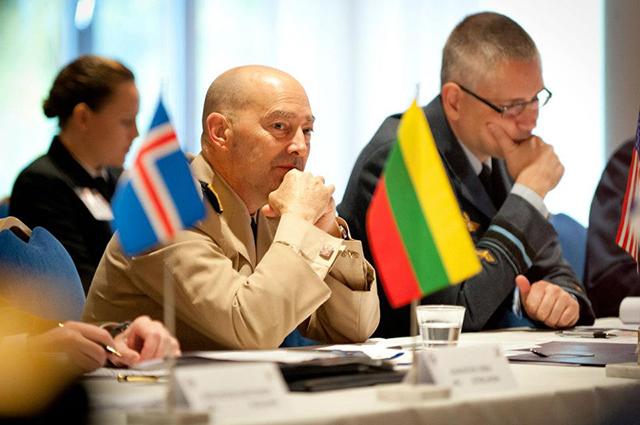
Roos: Regarding relationships amongst allies, Turkey has been at the centre of the attention lately, especially in Europe, where confrontations between the Turkish and other NATO allies’ navies (the Greek and the French ones in particular) in the Eastern Mediterranean have intensified. This comes a few years after another NATO crisis, triggered by the decision of Turkey to buy the S-400 anti-aircraft weapon system from Russia. To a certain extent, you have a very personal relation to Turkey, as your paternal grandparents fled the Ottoman Empire in the 1920s when others in their family were not as lucky and got killed during what is now called by some historians the “Pontic Genocide” [the systematic killing of the Christian Greek minority in Anatolia in 1914-1922]. As SACEUR, you worked very closely with high-ranking Turkish officials. How does a leader manage to separate one’s own personal feelings from one’s duty? And how can we keep trust between partners and allies in spite of all the trauma of History?
Stavridis: Indeed, my grandparents were refugees from the Ottoman Empire. In 1922 they were driven out of what was then called Smyrna -which is today Izmir, and barely escaped with their lives. My grandmother stood on a burning quay wall in the city of Smyrna and was rescued by a Greek fisherman who brought her to Athens and then she and my grandfather took ship and came to America through Ellis Island. So yes, you’re right, I have personal family history that binds me with Turkey, and technically I’m of Turkish descent in the sense that my grandparents were citizens of the Ottoman Empire; they spoke Turkish, French, English and Greek obviously. And the way I approached this was to go immediately to Turkey when I became SACEUR.
My very first official visit as SACEUR was to Ankara. And I met and worked very closely with the Minister of Defence and the Minister of Foreign Affairs. I also became very close, over those years, with Ahmet Davutoğlu, who went on to become Prime Minister and with whom I’ve remained in contact and friendship to this day. I worked also very closely with the former Chief of Defence, currently Minister of National Defence, General Hulusi Akar. So my point is: we have to respect the past, understand our history, but we can’t be imprisoned by it. And that was the message I took to Ankara. And by the way, during my four years as SACEUR, Turkey was an extremely productive and positive force in the Alliance, sending troops, ships and aircrafts on every single mission, including Libya, which back then was controversial.
I’ll close here by sharing an anecdote: after four years of working closely with Turkey, I went to Ankara to say farewell, meeting with President Erdoğan and Prime Minister Davutoğlu. And as is traditional, they presented me with a gift as I was leaving; and instead of what you would normally expect, a fountain pen or a beautiful vase or local piece of art, they presented me with a book of vintage postcards about the Greek community in Smyrna a hundred years earlier. It was very moving! And the Minister said to me: “you have showed us that we must remember the past but not be imprisoned by it.” And so, that’s a long way of saying you can build trust, personal relationships do matter, you have to understand History but be able to move beyond it. A good example at a macro level is what is happening today in Colombia, or South Africa, or Rwanda, in all these nations where there have been horrific and terrible levels of violence. But, as difficult as it is, all these nations are working hard to try and move beyond that, and they exact accountability but they also recognise that what matters is the truth and the ability of a society to move forward, to remember the past but not be imprisoned by it. That is the essence of trust.
This is the first part of this interview. You can find the second part here.