10 Break-Out Sessions
[timetable id="9" column_title="0" filter_visible="1" filter_multiple="1" event_box_time="0"]
A certain level of scepticism seems to have always belonged to intergenerational etiquette. In the 1960s, activist Jack Weinberg coined the saying “Don’t trust anyone over 30.” When following the sometimes intense online battles between members of different generations – in particular between so-called boomers and millennials – two things can be observed: The saying works both ways, and the issue has lost none of its immediacy.
In this year’s Voices of the Leaders of Tomorrow Report – a collaboration of the Nuremberg Institute for Market Decisions (NIM) and the St. Gallen Symposium – we examined how much trust the Leaders of Tomorrow place in representatives of today’s – relatively speaking – older generation in power. The specific question was to what extent they trust these leaders to act in the best interests of the younger generations. The respondents were asked to evaluate two classic components of trust: Competence and goodwill. These components are considered to be indispensable for trustworthiness, regardless of whether we talk about interpersonal relationships or trust in institutions and organizations. If a person or entity wants to be considered trustworthy, she or he must have the skills and the intention to fulfil the expectations of the one who puts trust in her or him.
The Leaders of Tomorrow have differentiated perceptions of political and economic leaders in general and also regarding their competence and goodwill. All in all, business leaders are viewed more positively. However, an urgent need for improvement applies to both.

While political leaders are considered to be competent to make the best possible decisions for the younger generations by just under 40%, business leaders achieve 50%. The assessment of their willingness to prioritize the interests of the younger generations is even lower for both groups. Just 22% believe that politicians are willing to prioritize the interests of the younger generations, while business leaders reach 36%.
When the assessments of competence and goodwill are analyzed in a cross evaluation, it turns out that only 15% of the Leaders of Tomorrow think that the political leaders of today are both competent and willing to prioritize and make decisions in the best interests of the younger generations, and 26% state that the business leaders of today are both competent and willing to do so. Of course, one can question whether politicians or economic leaders should put the interests of the younger generations at the center of their actions. However, obviously many respondents doubt that they have appropriate competence in the first place.
“We need leaders from all generations to partner with each other in imagining and advancing solutions that bring benefit to our people and planet”, said Tommy Koh, a young civil servant from Singapore. “Pathfinders such as shadow management committees comprising young leaders can help expand the overall pool of ideas, increasing the likelihood of finding solutions that work.”
Indeed, stabilizing and strengthening trust in society and institutions is an important task for leaders of today, regardless of which generation they belong to. And according to our results, action is necessary. We asked what measures the Leaders of Tomorrow expect from the current leaders to strengthen or regain the trust of the younger generation in institutions and society. We used a list of 10 different options from which respondents could select a maximum of 5. A standout front-runner did not emerge, but two options reached more than 60% consent.

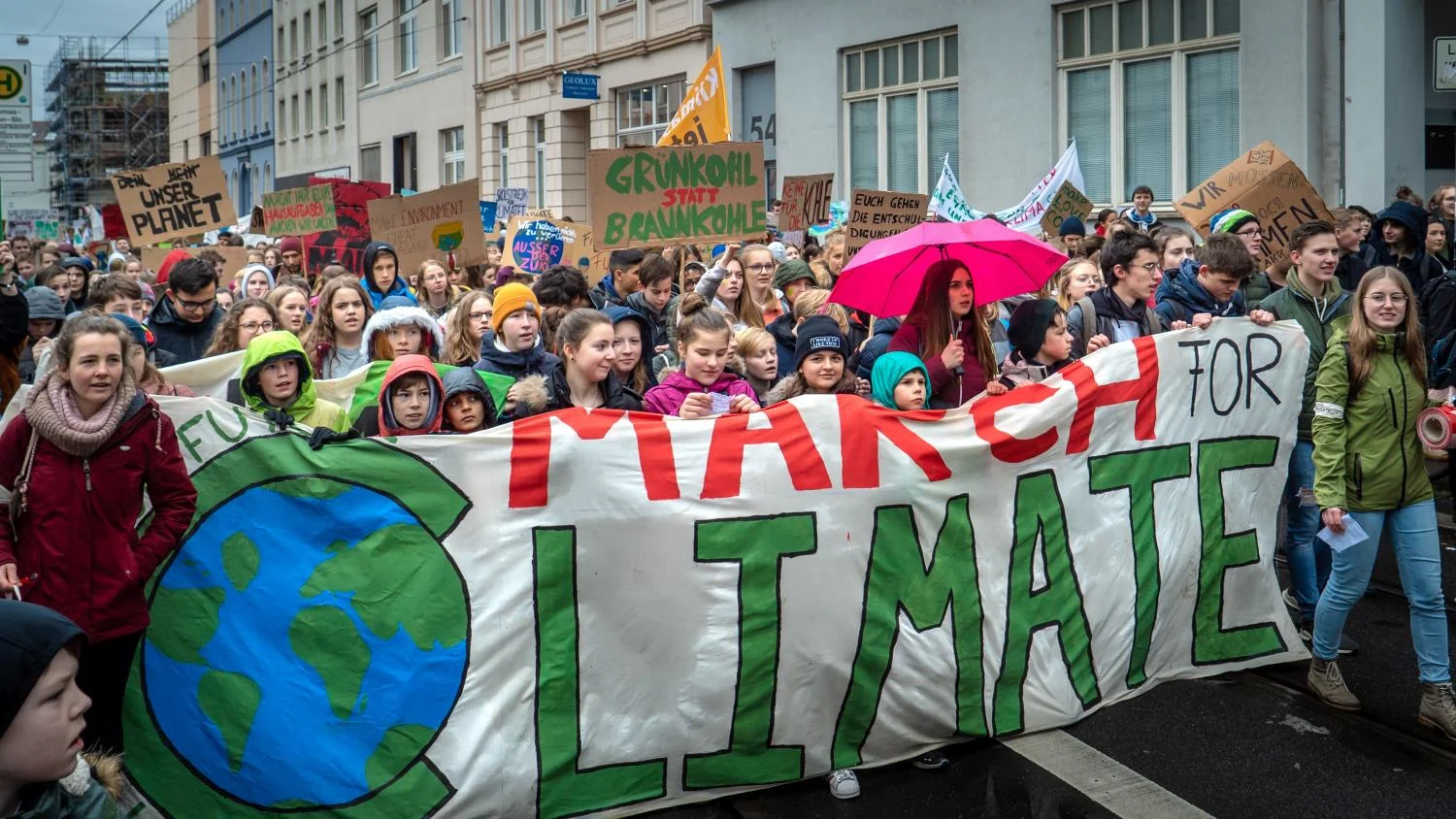
Environmental issues are enormously important for the younger generation. This was also clearly evident in last year’s Voices of the Leaders of Tomorrow report (Gaspar, Dieckmann & Neus, 2020). Obviously, the topic plays a key role in fostering the younger generation’s trust in society and institutions. A total of 64% of respondents ranked greater prioritization of climate and environmental issues as one of the most relevant measures. Increasing transparency in institutional decision-making comes in second with 61% in favor. Another four measures were chosen by around 50% of respondents for strengthening or increasing the trust of the younger generation: Measures against economic inequality (e.g., redistribution of income and wealth), listening more to scientists on issues of great relevance for the future, promoting dialogue between people with different viewpoints or lifestyles, and a greater role of ethical values in leadership. By some margin, each of the following measures was named by about one-third of the survey participants:
Greater focus on driving the digital transformation of the economy, regulation of social media platforms to prevent hate speech and fake news, and quotas for young leaders in institutional decision-making. Given the respondents’ critical attitude toward social media that will be discussed later in the report, the percentage of mentions for social media regulation is surprisingly low. At the bottom of the list, selected by only 17%, is the option “Greater investments in public security and law and order“. The Leaders of Tomorrow’s preferred set of measures therefore appears to focus on ecologically responsible behavior, societal openness, and values rather than regulation or direct empowerment of the younger generation. Thus, the Leaders of Tomorrow are much more in favor of transparency – allowing the current leaders to make choices but providing visibility in the decision-making process – than of introducing quotas of young leaders to force their voice to be heard in the decision-making process.
Read the full Voices of the Leaders of Tomorrow Report here for all findings and detailed analysis.


