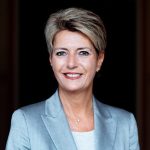
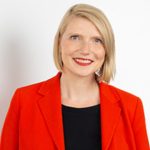
Karin Keller-Sutter
President of the Swiss Confederation
Federal Councillor Karin Keller-Sutter is the President of the Swiss Confederation and has been the Head of the Federal Department of Finance (FDF) since January 2023. Before her election to the Swiss Federal Council in December 2018, she represented the canton of St. Gallen in the Council of States from 2011 until the end of 2018, serving as President of the Council of States from 2017 to 2018. Her political career began in 1992, and from 2000 to 2011, she was a member of the cantonal government of St. Gallen (Regierungsrat), where she held various senior positions, including leading the Justice and Security Department. Outside of government and politics and prior to joining the Swiss Federal Council, Ms. Keller-Sutter has held multiple board memberships, including positions at Bâloise Insurance Group, the Swiss Employers Association, and the NZZ Media Group. Notably, she also served on the board of trustees for the St. Gallen Symposium until 2018. Initially a trained translator/interpreter and secondary school teacher, between 1989 and 2000 she worked as a freelance translator and also taught at a vocational school. Hailing from the canton of St. Gallen, she holds a postgraduate degree in pedagogy from the University of Fribourg, Switzerland.
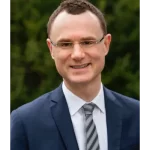
Jakov Milatović
President of Montenegro
Jakov Milatović is the President of Montenegro, having assumed office on May 20, 2023. With a distinguished academic and professional background, he has played a pivotal role in advancing economic development and fostering regional cooperation in Southeast Europe. Before his election, President Milatović founded the Europe Now Movement! in June 2022, following his tenure as Minister of Economic Development in the 42nd Government of Montenegro (2020–2022). In his ministerial role, he spearheaded key economic initiatives to strengthen Montenegro’s economy and accelerate the country’s integration into the European Union. Prior to his government service, President Milatović built a robust career in international finance. Beginning in 2014, he worked at the European Bank for Reconstruction and Development (EBRD) in the economic and political analysis team, focusing on Southeast Europe and the Western Balkans. From 2018 to 2020, he was stationed in Bucharest as Chief Economic Analyst, overseeing Romania, Croatia, Slovenia, and Bulgaria. Earlier in his career, he gained valuable experience in Montenegro’s banking sector and abroad. President Milatović holds a master’s degree in economics from St. John’s College at the University of Oxford, where he was awarded a British Government scholarship. His academic journey also included studies at Illinois State University (as a U.S. Government scholarship recipient), the Vienna University of Economics and Business (under an Austrian Government scholarship), and Sapienza University in Rome (through the European Commission). In addition to his formal studies, he has participated in numerous educational programs organized by institutions such as the International Monetary Fund (IMF), the United Nations, the Konrad Adenauer Foundation, Stanford University, and the University of Beijing. In the fall of 2022, he was a guest lecturer at the Luxembourg Business School.
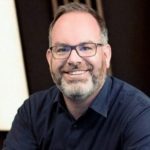
Ndaba Gaolathe
Vice President and Minister of Finance, Republic of Botswana
Ndaba Nkosinathi Gaolathe is the Vice President and Minister of Finance of the Republic of Botswana. He also serves as Member of Parliament for Gaborone Bonnington-South, Vice President of the Umbrella for Democratic Change (UDC), and President of the Alliance for Progressives, one of the UDC’s member parties. Earlier in his political career, Mr Gaolathe advised former President Festus Mogae on economic and national policy matters and served as a speechwriter. He also chaired the campaign of Gomolemo Motswaledi, founder of the political movement that now forms part of the current government. Before entering politics, Mr Gaolathe built a career in economics, strategy, finance, and governance, working for economic think tanks, governments, and investment banks at regional and international levels. He has experience in portfolio management, macroeconomic and monetary policy, scenario modelling, and institutional restructuring, and has collaborated with a broad array of institutions across multiple sectors. A committed community advocate, Mr Gaolathe founded a volunteer initiative in 1991 to help underprivileged students succeed in Cambridge O-Level examinations—particularly in mathematics—and also supported them in English, general knowledge, survival skills, and entrepreneurship. From his university years until 2014, he personally mentored over 40 students each year through this programme. He has also been active in several civic and faith-based organisations both in and outside Botswana. Mr Gaolathe holds a MBA in Finance from the Wharton School at the University of Pennsylvania and a Bachelor of Science in Mathematics from The George Washington University.
Magnus Brunner
Commissioner for Internal Affairs and Migration, European Commission
Magnus Brunner is the European Commissioner for Internal Affairs and Migration, a position he has held since 1 December 2024. Prior to his current role, Mr Brunner served as Austria's Federal Minister of Finance from December 2021 to November 2024. He also held the position of State Secretary in the Ministry of Climate Action, Energy, Environment, Mobility, Innovation, and Technology. Earlier in his career, he was a member of the Federal Council for the Austrian People’s Party (ÖVP) from May 2009 to January 2020. Mr Brunner holds a Doctor of Law degree from the University of Vienna and a Master of Laws (LL.M.) from King’s College London.
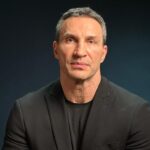
Wladimir Klitschko
Founder, Klitschko Foundation
Wladimir Klitschko is a former heavyweight boxing champion renowned not only for his prowess in the ring but also for his significant public engagement and philanthropy. After retiring from boxing, Mr Klitschko has become a prominent public figure and shifted his focus from professional boxing to public advocacy, particularly in rallying international support for Ukraine during the ongoing invasion of Russia. Since the escalation of the conflict, Mr Klitschko has joined Ukraine's Territorial Defense Forces and has been vocal about the need for global support to counter Russian aggression. He has urged the international community to provide Ukraine with necessary supplies and financial support, highlighting the critical situation on the ground and the urgent need for military and humanitarian aid.
Leon Schreiber
Minister of Home Affairs, Republic of South Africa
Leon Schreiber has served as Minister of Home Affairs since 2024 and has been a Member of the National Assembly of South Africa for the Democratic Alliance (DA) since May 2019. Prior to his cabinet appointment, he was the Shadow Minister of Public Service and Administration, where he gained prominence for leading a campaign against cadre deployment in the national government. In addition to his governmental roles, he is a well-known advocate for Afrikaans language rights at Stellenbosch University. Mr. Schreiber is also no stranger to the St. Gallen Symposium, having attended in 2015 as a Leader of Tomorrow and a finalist in the Global Essay Competition. He holds a master’s degree in political science from Stellenbosch University and completed his PhD in political science at the Free University of Berlin.
Christian Sewing
CEO, Deutsche Bank
Christian Sewing is the CEO of Deutsche Bank, a position he has held since April 2018. He has been a member of the Management Board since January 2015 and took on additional responsibility for Human Resources in May 2021. Mr Sewing has spent his entire career at Deutsche Bank, which he joined in 1989. Over the years, he has held key leadership roles across various divisions, including Corporate Banking, Investment Banking, and Risk Management. Before becoming CEO, he led the Private & Commercial Bank, including Postbank, and served as Head of Group Audit. Earlier in his career, he was Deputy Chief Risk Officer and Chief Credit Officer, with international assignments in Frankfurt, London, Singapore, Tokyo, and Toronto. Mr Sewing completed his bank apprenticeship at Deutsche Bank and earned a diploma from the Bankakademie Bielefeld and Hamburg.
Stefan Paul
CEO, Kühne+Nagel
Stefan Paul has been CEO of Kühne + Nagel International AG since August 2022 and previously served as EVP of Road Logistics and Sales from 2020 to 2022 and EVP of Road Logistics from 2013 to 2020. Mr. Paul began his career with Kühne + Nagel, where he worked for seven years before joining DHL. Before returning to Kühne + Nagel in 2013, Paul spent more than 12 years with DHL and served as CEO of DHL Freight Germany from 2010 to 2013 and Senior VP of marketing and Sales from 2010 to 2013.
André Hoffmann
Vice-Chairman, F. Hoffmann-La Roche; Co-Founder, InTent
André Hoffmann is the Vice Chairman of Roche Holding AG. Alongside his roles in the family business, he serves on the Board of SystemIQ, helping drive positive disruption in economic systems, and sits on the Board of Trustees of the World Economic Forum, and has founded InTent. He is also President of W.A. de Vigier Stiftung and Vice Chairman of the Board of the Venture Foundation, supporting entrepreneurship and innovation. Mr Hoffmann has a distinguished career in nature conservation and sustainability. He is the President of Fondation Tour du Valat, a world-renowned institute dedicated to wetland conservation, and serves on the boards of Capitals Coalition, b-Team, Peace Parcs, and the Givaudan Foundation. Additionally, he helped establish the Hoffmann Institute at INSEAD, which is at the forefront of advancing sustainability in business education. Mr Hoffmann studied economics at the University of St.Gallen and holds an MBA from INSEAD.
Thomas Schinecker
CEO, Roche Group
Dr Thomas Schinecker has been Chief Executive Officer of the Roche Group since March 2023 and a member of the Corporate Executive Committee since 2019. Prior to assuming his current role, he served as interim CEO of the Pharmaceuticals Division in early 2023. For two years, he led Roche Diagnostics' largest business unit, including research and development, before taking over as CEO of the Diagnostics Division (2019–2022). Dr Schinecker joined Roche in 2003 as part of a management development programme. Over the course of his career at the company, he has held leadership positions across six countries and three continents. Before taking on more senior leadership roles, he served as Head of Marketing and Sales in Austria, Lifecycle Leader for Diagnostics' Sequencing Solutions in the United States, and General Manager of Roche Diagnostics in both Sweden and Germany. Alongside his work at Roche, Dr Schinecker serves as a member of the Innovation Board of Labor Berlin (Charité and Vivantes), Chair of the Biopharmaceutical CEOs Roundtable (BCR), and President of the International Federation of Pharmaceutical Manufacturers and Associations (IFPMA), both since 2025. He was also elected to the Board of Directors of Chugai Pharmaceutical in Japan in 2025. Born in Germany, Dr Schinecker holds both German and Austrian citizenship and grew up in Singapore. He studied genetics in Salzburg, Austria, and earned a PhD in molecular biology from New York University in 2003.
Florence Gaub
Director, NATO Defense College
Florence Gaub is the Director of the Research Division at the NATO Defense College in Rome. Prior to this, she held several high-profile positions, including Deputy Director at the EU Institute for Security Studies, Foresight Advisor at the EU Council, and Special Advisor to EU Commissioner Maroš Šefčovič. With a focus on strategic foresight and geopolitical trends, Ms Gaub has significantly contributed to understanding future challenges and long-term global developments. She began her career at NATO’s Middle East Faculty in 2009, and her work encompasses conflict zones in the Middle East and North Africa, as well as institutional change and geopolitical analysis. Her publications include the bestseller Zukunft: Eine Bedienungsanleitung (2023). In addition to her current role, she serves on the World Economic Forum’s Global Future Council on Complex Risks and is a member of the World Science Fiction Society. Ms Gaub holds a PhD from Humboldt University and degrees from Sciences Po Paris, the Sorbonne, and the University of Munich.
Andreas Berger
Group CEO, Swiss Re
Andreas Berger has been the Group Chief Executive Officer of Swiss Re since July 2024, having joined the company in March 2019 as Chief Executive Officer of Corporate Solutions and a member of the Group Executive Committee. Before his tenure at Swiss Re, he served on the Board of Management at Allianz Global Corporate & Specialty, where he held the position of Chief Regions and Market Officer, overseeing Central and Eastern Europe, the Mediterranean, Africa, and Asia. Additionally, he was responsible for the Global Broker Channel Distribution for Allianz Group. Mr. Berger is currently the Chairman of the International Insurance Society and a non-executive Board member at Advance – Gender Equality in Business. Since 2024, he has also been a member of the Board of Trustees of the St. Gallen Foundation for International Studies. He holds a master's degree in law from Justus Liebig University and a master's degree in business administration from Université Paris-Dauphine.
Thomas Buberl has held the position of CEO and Director of AXA since 2016. He began his professional journey at the Boston Consulting Group and has held various executive positions on the management boards of both AXA Group and several AXA subsidiaries. In addition to his role at AXA, Mr Buberl serves as a member of the Supervisory Board of Bertelsmann and is a part of the Directors and Corporate Governance Committee of IBM. He earned his Ph.D. in Economics from the University of St.Gallen.
Patrick Rapp
State Secretary, Ministry of Economic Affairs, Labour, and Tourism, Baden-Württemberg
Patrick Rapp is the State Secretary at the Ministry of Economic Affairs, Labour, and Tourism of Baden-Württemberg, a position he has held since May 12, 2021. He also serves as a member of the State Parliament of Baden-Württemberg, having been first elected in 2011 and re-elected in 2016 and 2021. Previously, Dr Rapp held key leadership roles, including Chairman of the Rural Areas and Consumer Protection Working Group and Tourism Policy Speaker for the CDU state parliamentary group. Before his political career, he worked as a management assistant to the executive board in the food industry and as a personnel manager in the timber industry. In addition to his governmental duties, Dr Rapp is a member of the Tourism Advisory Board of Baden-Württemberg, serves on the advisory board of the Albert Ludwig University of Freiburg, and is the honorary president of the Confederation of German Brass Instrument Associations in Staufen. Dr Rapp holds a degree in forestry science from the Albert Ludwig University of Freiburg, where he also completed his doctorate at the Institute for Forestry Policy.
Karla Godoy
Executive Secretary for Sustainability of the State of Pernambuco, Brazil
Karla Godoy is the Executive Secretary of Sustainability for the State of Pernambuco, where she leads efforts to advance sustainability and climate action. Her work focuses on supporting the sustainable development of emerging economies, with particular attention to the needs of vulnerable populations, including women, children, and traditional communities. She previously worked as an analyst of economic and financial projects for industries in Brazil and has published academic research on topics including political representation, UN peace missions and sexual crimes, and sustainable development as a democratic measure. Ms Godoy holds a bachelor's and a master's degree in Political Science from the Federal University of Pernambuco, as well as a second master’s degree in Development Practice from the University of Minnesota, where she was a Fulbright Scholar.
Felipe Paullier
Assistant Secretary-General for Youth Affairs, United Nations
Felipe Paullier assumed his mandate as Assistant Secretary-General for Youth Affairs in December 2023. He leads systemwide collaboration, coordination, and accountability on youth affairs, overseeing the UN’s efforts to strengthen meaningful youth engagement in the areas of sustainable development, human rights, and peace and security. Prior to taking up his post, Mr Paullier was the Director General of the National Youth Institute of Uruguay beginning in 2020, where he led efforts to engage young people in policy-making processes at the national level. Mr Paullier is a Medical Doctor by training, holding a Medical Doctor degree from the Universidad de la Republica Oriental de Uruguay and an MBA from Universidad Católica de Uruguay.
Prof. Simon Evenett
Professor of Geopolitics and Strategy, IMD
Prof. Simon J. Evenett is Professor of Geopolitics and Strategy at IMD and Co-Chair of the World Economic Forum’s Global Future Council on Trade and Investment. Prior to joining IMD in 2024, he served as Professor of International Trade and Economic Development at the University of St.Gallen from 2011. An internationally recognized expert on trade, investment, and geopolitical dynamics, Prof. Evenett has developed several policy intelligence initiatives that provide real-time insights into global legal, policy, and regulatory developments. In 2023, he launched the Crux of Capitalism initiative, offering valuable insights into the performance of firms and sectors in 21 major economies. In 2020, he co-founded the St. Gallen Endowment for Prosperity Through Trade (SGEPT) in collaboration with the Max Schmidheiny Foundation and the University of St.Gallen. SGEPT currently hosts three leading independent commercial policy monitoring initiatives: the Global Trade Alert, a key resource for assessing trade tensions; the New Industrial Policy Observatory; and the Digital Policy Alert. He has also taught at the University of Oxford and served twice as a World Bank official. Prof. Evenett holds a bachelor’s degree from the University of Cambridge and a PhD from Yale University, and he has authored over 200 publications for academic, policy, and business audiences.
Tim Scharwath
Member of the Management Board, Deutsche Post DHL; CEO, DHL Global Forwarding, Freight
Tim Scharwath is the CEO of DHL Global Forwarding, Freight, a role he has held since June 2017. He also serves as a member of the Board of Management at Deutsche Post DHL Group, with his current term extending until May 2030. Before joining Deutsche Post DHL Group, Mr Scharwath spent over two decades at Kuehne + Nagel International AG. During his tenure, he held several key positions, including Executive Vice President for Air Logistics, Regional President for North West Europe, and Managing Director for the Netherlands. Mr Scharwath holds a degree in business administration from the University of Hamburg.
Nabeel Al-Amudi
CEO, Olayan Financing Company
Nabeel Al-Amudi is the CEO of Olayan Financing Company, one of the largest family-owned businesses in the Middle East. Previously, he served as Saudi Arabia's Minister of Transport from 2017 to 2019. Before that, he held the roles of President and Vice Chairman of the Saudi Ports Authority from 2015 to 2017. Prior to his government work, Al-Amudi had a notable career at Saudi Aramco, where he worked in the legal department, led long-term strategic planning, and ultimately became President of Saudi Aramco's North American subsidiary. Currently, he chairs Mobily, the Kingdom’s second-largest mobile operator, and serves as Chairman of the Board of Trustees for Imam Abdulrahman bin Faisal University, while also holding a board position at Olayan Saudi Holding Company. Nabeel has a JD from Harvard Law School and a bachelor’s degree in chemical engineering from Stanford University. In Addition, he completed the Stanford Business Executive Program in 2009.
Dominic Barton
Co-Conference Chairperson, St. Gallen Symposium; Chairman, Rio Tinto
Dominic Barton is the Chair of the Board at Rio Tinto, a role he assumed in 2022, bringing with him over three decades of experience in global business, public policy, and diplomacy. From 2019 to 2021, he served as Canada’s Ambassador to the People’s Republic of China, where he advanced Canadian interests and engagement with one of the country’s largest trading partners. Prior to this, he spent over 30 years at McKinsey & Company, including nine years as Global Managing Partner. Earlier in his career at McKinsey, he served as Chairman in Asia and oversaw the firm’s Korea office. In addition to his corporate and diplomatic service, Mr Barton has held a range of public sector leadership roles, including Chair of Canada’s Advisory Council for Economic Growth and Chair of the International Advisory Committee to the President of South Korea on National Future and Vision. He is an Adjunct Professor at Tsinghua University in China and, since 2019, has served as one of three Conference Chairpersons of the St. Gallen Symposium. Mr Barton holds a bachelor’s degree in economics from the University of British Columbia and a master’s degree in economics from Oxford University, where he studied as a Rhodes Scholar.
Prof. Bai Chong-En
Dean, School of Economics and Management, Tsinghua University
Professor Chong-En Bai is Dean of the School of Economics and Management and Distinguished Professor of Arts, Humanities and Social Sciences of Tsinghua University. His research focuses on the relationship between economic institutions, policy, and development, and from this perspective, the Chinese economy. Professor Bai is Vice-Chairman of the 13th All-China Federation of Industry and Commerce. He is a member of the National Committee of the Chinese People’s Political Consultative Conference, the “15th Five-Year Plan” National Development Planning Expert Committee, the Chinese Economists 50 Forum, the China Finance 40 Forum, and Chinainfo 100. He is also Chairman of Academic Committee of China Wealth Management 50 Forum. He was a member of the monetary policy committee of the People’s Bank of China and of the executive council of International Economic Association, a non-resident Senior Fellow of the Brookings Institution, and Adjunct Vice-President of Beijing State-Owned Assets Management Co., Ltd.. He earned his Ph.D. degree in Economics from Harvard University.
Marcela Escobari
Fmr. Sp. Assistant to the President & Coordinator for the LA Declaration on Migration and Protection
Marcela Escobari is a senior fellow at Brookings and a leading voice on international development, inclusive growth, and economic mobility. Her career has spanned the private sector, government, and academia, with a common thread of promoting growth that is inclusive and sustainable. She has been twice confirmed by the U.S. Senate under Presidents Barack Obama and Joe Biden to lead the Latin America & Caribbean bureau at USAID, and most recently served on the White House National Security Council as Special Assistant to the President on hemispheric migration and protection. In this role, she led efforts to promote safe, orderly, and humane migration and to advance a collaborative, regional response to the displacement of over 8 million people across Latin America and the Caribbean. This regional effort contributed to a more than 75% decrease in irregular migration at the U.S. border in 2024, helping to stabilise and integrate over 4.5 million migrants and refugees within Latin America. Before her government service, she was Executive Director at the Center for International Development at Harvard University and worked at Brookings, where she launched the Workforce of the Future initiative focused on policies to restore opportunity in U.S. cities and states in the wake of globalisation and COVID-19. She holds a BA in Economics from Swarthmore College and a Master in Public Policy in International Development from the Harvard Kennedy School.
Prof. Christoph Heusgen
Honorary Professor, University of St.Gallen
Christoph Heusgen is the former Chairman of the Munich Security Conference (MSC), a position he held from 2022 until the conclusion of the 61st Munich Security Conference in 2025. Before assuming that role, he served as Permanent Representative of the Federal Republic of Germany to the United Nations in New York from 2017 to 2021, chairing the UN Security Council in April 2019 and July 2020. From 2005 to 2017, Ambassador Heusgen advised Chancellor Angela Merkel on foreign and security policy and led the Foreign Policy Department of the Federal Chancellery as Director General. From 1999 to 2005, he headed the political staff of Javier Solana, then High Representative for the EU’s Common Foreign and Security Policy. Earlier in his career, he served as Head of the Europe Division at the Federal Foreign Office (1997–1999), following his role in the ministerial office of Foreign Minister Klaus Kinkel (1993–1997). In 1988, he was appointed Personal Assistant to the Coordinator for Franco-German Cooperation, after previous postings at the German Consulate in Chicago and the German Embassy in Paris. Ambassador Heusgen joined the German Foreign Service in 1980. He studied at the University of St.Gallen, Georgia Southern College in the United States, and the Sorbonne in Paris, earning his doctorate at the University of St.Gallen, where he is an honorary professor and currently teaches political science.
Thomas Süssli
Lieutenant General, Chief of the Swiss Armed Forces
Thomas Süssli has been Chief of the Swiss Armed Forces (CdA) since January 2020, responsible for leading the army and overseeing key commands, including the Armed Forces Staff, Joint Operations Command, Armed Forces Logistics Organisation, Cyber Command, and Training and Education Command. Immediately prior, he served as Major General of the Armed Forces Command Support Organisation from January 2018 to December 2019, and as Brigadier General, Commander of Logistics Brigade 1 from September 2015 to December 2017. Before his military leadership roles, Mr Süssli gained extensive experience in the financial sector. Between 2014 and 2015, he was the CEO of Vontobel Financial Products (Asia Pacific) Pte. Ltd. Additionally, he previously served as Head of Investment Advisory International in the Global External Asset Managers division of Credit Suisse and Head of Processing Management in the Transaction Banking division of Vontobel. Earlier in his career, he was COO and Head of Product Management at IFBS AG and held various positions at UBS in Basel, Zurich, and London. Mr Süssli holds an Executive MBA from the University of Applied Sciences for Technology and Economics (HTW) and is a Swiss certified expert in IT with a federal diploma.
Jens Fehlinger
CEO, Swiss International Air Lines
Jens Fehlinger is the Chief Executive Officer of Swiss International Air Lines Ltd., a role he assumed in 2024. Since beginning his professional career with the Lufthansa Group in 2011, he has held a number of leadership positions across the organisation, including Managing Director and Accountable Manager of both Lufthansa CityLine and Lufthansa City Airlines, as well as Head of Structural Crisis Management and the ReNew Restructuring Program at Lufthansa Group. He also previously held strategic roles in operations performance, business development, and network management at Lufthansa. Alongside his management responsibilities, Mr Fehlinger is a trained commercial pilot. He joined Lufthansa as a First Officer on the A320 in 2006 and later flew as a Senior First Officer on the A380. While he currently focuses fully on his executive duties, his flying experience continues to shape his leadership perspective. Mr Fehlinger holds an Executive MBA with global modules in Madrid, Los Angeles, and Singapore. He also earned a Master of Science in Traffic and Transportation from the Technical University of Darmstadt and a degree in Aviation Engineering and Management from Bremen City University of Applied Sciences.
Prof. John Kay
Fellow in Economics, St John's College, Oxford
Prof. John Kay is a renowned economist and author celebrated for his contributions to public policy and economic thought. He is a Fellow of the British Academy, the Royal Society of Edinburgh, and St John's College, Oxford. Over the course of his distinguished career, he has held prestigious roles, including professor at London Business School, director of the Institute for Fiscal Studies, and visiting professor at the London School of Economics. Prof. Kay has significantly shaped economic policy, most notably through his leadership of the Kay Review of UK Equity Markets and Long-Term Decision-Making, commissioned by the UK government in 2011. His influential recommendations have helped align financial markets with long-term economic goals. An accomplished writer, Prof. Kay is the author of several highly regarded books, including “The Long and the Short of It”, “Other People's Money”, and his most recent work, “Cooperation in the 21st Century”, which examines the role of collaboration in addressing global challenges. Prof. Kay studied economics at the University of Edinburgh and earned a DPhil from Nuffield College, Oxford.
Bineta Diop
Founder, Femmes Africa Solidarité; Co-Convener, AWLN
Bineta Diop is the Founder and President of Femmes Africa Solidarité, an international NGO dedicated to promoting peace, security, and development in Africa, and a Member of the Board of the Hunger Project. She is also the Co-Convener of the African Women Leaders Network (AWLN), a women-led network in 39 African countries formed in 2017 to advance the inclusion of women in leadership and decision-making processes. Since 2014, she has served as the Special Envoy of the Chairperson of the African Union Commission on Women, Peace and Security. Ms. Diop has led numerous peace-building programmes to enhance women’s participation in peace processes. She played an instrumental role in achieving gender parity within the African Union Commission in 2003, the adoption of the Solemn Declaration on Gender Equality in Africa (2004), and the adoption of the Protocol to the African Charter on Human and People’s Rights on the Rights of Women in Africa (2003) by the African Union. Ms. Diop studied Management in Paris, France and Public Relations and Communication in Lausanne, Switzerland. She received an Honorary Doctorate from the United Nations-mandated University for Peace in 2012 and an Honorary Doctorate from the University of Middlesex in London, UK, in 2014.
Nico Luchsinger
Executive Director, Asia Society Switzerland
Nico has been working with Asia Society Switzerland since its inception in 2016 – as Head of Programming, Co-Executive Director, and since April 2021 as sole Executive Director. A medieval historian by training (really), he previously worked for Swiss newspaper Neue Zürcher Zeitung, founded the global entrepreneurial community Sandbox, and ran business development for Swiss startup Mila.
Nick Studer
CEO, Oliver Wyman
Nick Studer is the President and Chief Executive Officer of Oliver Wyman Group, a position he has held since July 2021. He also serves as a Vice Chair of Marsh McLennan and is a member of its Executive Committee. Previously at Oliver Wyman, Mr Studer has held key leadership roles, including Managing Partner of the Consumer, Industrial, and Services Practice and the Financial Services Practice. Furthermore, Mr Studer is a strong advocate for diversity, serving as executive sponsor of Oliver Wyman's racial and ethnic diversity initiatives. A founding director of TheCityUK and advisor to the FICC Markets Standards Board, he has worked extensively with senior executives and government leaders on governance, strategy, and public policy. Mr Studer holds an honors degree in Manufacturing Engineering from the University of Cambridge.
Philipp Navratil
CEO, Nespresso
Philipp Navratil is the CEO of Nestlé Nespresso S.A., a position he has held since July 2024. With over two decades of experience at Nestlé and an extensive background in the coffee industry, he combines deep market insights with innovative strategies to drive Nespresso’s evolution in an increasingly competitive landscape. Prior to his current role, Mr Navratil served as Senior Vice President of Nestlé’s Coffee Strategic Business Unit from 2020, where he was responsible for shaping the global strategy and driving innovation for the Nescafé and Starbucks coffee brands. Before this, he led Nestlé’s coffee and beverage business in Mexico from 2013 and was Country Manager for Nestlé Honduras from 2009. He previously held various commercial roles in Central America after beginning his career at Nestlé in 2001 as an International Auditor. Mr Navratil holds a Master of Business Administration from the University of St. Gallen, Switzerland.
Derek Walker
Future Generations Commissioner for Wales
Derek Walker is the Future Generations Commissioner for Wales, a position he has held since March 2023. In this role, he is committed to safeguarding the needs of future generations, providing guidance to public bodies and policymakers in Wales on incorporating long-term thinking into decisions that impact social, economic, environmental, and cultural wellbeing. Prior to his appointment as Commissioner, Derek served for over a decade as Chief Executive of Cwmpas, the UK’s largest development agency for social enterprises and cooperatives, where he led initiatives to strengthen communities, create jobs, and promote inclusive, community-focused economic growth. From 2004 to 2009, he was Head of Policy and Campaigns at the Wales Trade Union Congress (TUC), where he developed impactful campaigns and organized high-profile events to advance the objectives of the Wales TUC. Derek holds a master’s degree in international journalism from Cardiff University and a bachelor’s degree in modern european studies from University College London.
Prof. Yan Xuetong
Distinguished Professor & Honorary Dean, Institute of International Relations, Tsinghua University
Prof. Yan Xuetong is a distinguished Professor at Tsinghua University and the Honorary Dean of the Institute of International Relations (IIR) at Tsinghua University. A central figure in the development of the "Chinese School of International Relations," he is widely recognized as the founder of the international relations theory of moral realism. From 2012 to 2023, Prof. Yan served as the Secretary-General of the World Peace Forum (WPF), the first high-level international security forum initiated by a Chinese non-governmental institution. Established in 2012, the WPF is co-organized by the IIR and the Chinese People’s Institute of Foreign Affairs (CPIFA). Previously, Prof. Yan served as the Director of the Institute of International Relations at Tsinghua University, where he also held the position of Chief Editor of The Chinese Journal of International Politics. Throughout his impactful career, he has authored numerous works that have profoundly influenced global debates in international relations. From 2014 to 2019, he was the only Chinese political science scholar included in Elsevier's Most Cited Chinese Researchers. His notable books in English include “Ancient Chinese Thought, Modern Chinese Power” and “Leadership and the Rise of Great Powers”, both published by Princeton University Press. His most recent work, “The Essence of Interstate Leadership” (2023), was published by Bristol University Press. Prof. Yan holds a Ph.D. in Political Science from the University of California, Berkeley, an M.A. in International Politics from the University of International Relations, China, and a B.A. in English from Heilongjiang University in Harbin, China.
Yael Meier
Co-Founder, ZEAM
Yaël Meier is the co-founder of ZEAM, the leading Gen Z consultancy in the DACH region. She heads a team of 30 strategists and content creators who help companies connect with the next generation of consumers and talent. Ms Meier is a SPIEGEL bestselling author of the book "Gen Z for Decision Makers" and was named to the Forbes 30 Under 30 list.
Christoph Brand
CEO, Axpo
Christoph Brand has served as Chief Executive Officer of Axpo Group since May 2020, leading Switzerland's largest producer of renewable energy. With extensive experience in the energy and telecommunications sectors, he has held key leadership roles including CEO of TX Markets, Sunrise Communications, and Adcubum, as well as Chief Strategy Officer at Swisscom. He is also Chairman of CKW AG and a Board Member at AMAG Group AG. Mr Brand holds a degree in economics from the University of Bern and completed the Advanced Management Programme at INSEAD.
Ruth Metzler-Arnold
President, Swiss Olympic
Ruth Metzler-Arnold is the President of Swiss Olympic and a seasoned leader with extensive experience in politics, business, and governance. She previously served as a member of the Swiss Federal Council, where she led the Federal Department of Justice and Police (EJPD) and held the position of Vice President of the Swiss Confederation. Before that, she was a member of the Government Council of the Canton of Appenzell Innerrhoden, serving as Finance Director. Ms Metzler-Arnold has held various leadership roles in the private sector, including positions at Novartis as Head of Investor Relations and General Counsel for Novartis France, as well as a career in audit and advisory at PricewaterhouseCoopers. She has also served on multiple corporate and foundation boards, contributing her expertise in governance, crisis management, and transformation processes. In addition to her leadership roles, Ms Metzler-Arnold previously served as President of the Swiss Sports Aid Foundation. She studied law at the University of Fribourg and is a certified public accountant.
Mitsuyuki Tominaga
President & COO, ASICS
Mitsuyuki Tominaga has served as President and Chief Operating Officer (COO) of ASICS Corporation since January 2024. He joined ASICS in 2018 as Executive Officer and Senior General Manager of the IT Division and later held roles as Chief Digital Officer (CDO) and Chief Information Officer (CIO), where he led the company’s digital transformation and innovation strategies. Prior to joining ASICS, Mr Tominaga held key positions at leading organizations, including Vice President and Executive Officer at IBM Japan, Vice President, Head of Services and Managing Executive Officer at SAP Japan, and President and Representative Director at Works Applications America. Mr Tominaga holds a bachelor’s degree from California Polytechnic State University and an MBA from Purdue University.
Peter Voser
Chairman of the Board of Directors, ABB; Chairman of the Board of Trustees, St. Gallen Symposium
Peter Voser has held the position of Chairman of the Board of Directors at ABB since 2015. Prior to his role at ABB, he served as the CEO of Royal Dutch Shell from 2009 to 2013 and held the position of CFO from 2004 to 2009. Mr Voser is a member of the Board of Directors at IBM Corporation and Temasek Holding, as well as the Group Chairman of the Board of Directors at its subsidiary, PSA International. From 2005 to 2010, he served as a member of the Board of Directors at UBS AG, and from 2011 to 2019, he was a member of the Board of Directors at Roche Holding. Since 2013, Mr Voser has assumed the role of Chairman of the Board of Trustees of the St. Gallen Symposium.
Angela Sun
Venture Capital; Board Director at Cushman & Wakefield, Western Union, Maxim (Apollo company)
Angela Sun is a principal at the Hyland Group, where she invests in and advises early-stage to growth companies and family offices. An experienced leader across the private, public, and nonprofit sectors, she also serves on the Board of Directors of The Western Union Company, Cushman & Wakefield, Maxim Crane Works (an Apollo portfolio company), and Kero Sports. Previously, Ms. Sun was Chief Operating Officer and Partner at Alpha Edison, an LA-based venture capital firm. Earlier, she spent ten years at Bloomberg LP, most recently as Global Head of Strategy and Corporate Development, where she spearheaded emerging technology initiatives and led M&A and commercial partnerships across the company’s media, financial products, enterprise, and data businesses. She also oversaw Bloomberg Institute, serving 1,500 universities worldwide. From 2008 to 2014, she was Chief‐of‐Staff to Bloomberg’s CEO, leading corporate-wide strategic planning, new business development, and growth initiatives in emerging markets and Asia. Before joining Bloomberg LP, Ms. Sun served as a Senior Policy Advisor in the Bloomberg Administration and held roles at McKinsey & Company, J.P. Morgan, and the Henry L. Stimson Center.
A summa cum laude graduate of Harvard College, she also holds a J.D. from Harvard Law School. She remains closely connected to Harvard, serving as an Elected Director of the Alumni board and Class Chair of the John Harvard Society. Ms. Sun is a Trustee of Second Stage Theater and is a member of the Council on Foreign Relations.
Prof. Oliver Gassmann
Professor of Technology Management, University of St.Gallen
Prof. Oliver Gassmann is Professor for Technology Management at the University of St. Gallen. He has published over 800 publications on innovation. His book ‘The Business Model Navigator’ by Financial Times, rapidly became an international bestseller. He has been Research Fellow at Berkeley (2007), Stanford (2012), and Harvard (2016). In 2014, he was awarded the prestigious Scholarly Impact Award by the Journal of Management. Prof. Gassmann is worldwide among the top 3 most cited researchers in the field of “Business Models” and “R&D Management” (Google Scholar). He is also active in several boards of international companies.
Anna Penido
Executive Director, Centro Lemann
Anna Penido is currently the Executive Director for the Centro Lemann for Leadership and Equity in Education. Prior to that she was the director of the Inspirare Institute (2012-2020), and contributed to the creation of the Brazilian curriculum standards. She was the chief of the UNICEF field office for the States of São Paulo and Minas Gerais (2007-2010) and founded and directed CIPÓ – Comunicação Interativa (1999-2007), a non-governmental organization dedicated to guaranteeing the rights of children, adolescents and young people through the educational use of communication means and technologies. She participated in the Advanced Leadership Initiative at Harvard University (2011), the Human Rights Training Program at Columbia University (1998), and the Thematic Residency on Youth as Agents of Transformative Change at The Rockfeller Foundation Bellagio Center (2018). Anna is an Ashoka fellow since 2002.
Josh Zoffer
Principal, Clocktower Ventures; Senior Non-Resident Fellow, Columbia Center on Global Energy
Josh Zoffer is a Principal at Clocktower Ventures, a venture capital firm investing in climate tech and fintech companies, a senior non-resident fellow at Columbia's Center on Global Energy Policy, and a Policy Fellow at Stanford's Institute for Economic Policy Research. From 2023 to 2024, he served as Special Assistant to the President for Economic Policy at the White House National Economic Council (NEC). At the White House, he led the NEC’s work on issues at the intersection of climate, energy, and markets, including climate technology investment, climate-related financial risk, carbon markets, energy security, and energy-related sanctions. He also worked closely on trade and supply chain issues, including China-related trade policy. From 2021 to 2023, Zoffer served at the U.S. Department of the Treasury, most recently as Senior Advisor to the Deputy Secretary. In that capacity, he served as the Deputy Secretary’s principal advisor on economic and foreign policy issues and as his chief speechwriter. He played a key role in many of the Treasury Department’s signature policies during this period, including the design and negotiation of the price cap on Russian oil and the implementation of the Inflation Reduction Act. He also co-led the negotiation of the U.S.-Japan Critical Minerals Agreement. He is a recipient of the Treasury Medal. Zoffer also served on both the Biden-Harris Presidential Transition Team and the Clinton-Kaine Presidential Transition Team and advised the Biden-Harris campaign on economic policy issues. Before serving in government, he worked at Cove Hill Partners, a technology-focused private equity firm, and in McKinsey & Company’s New York Office. He holds an A.B. in Social Studies from Harvard University and a J.S. from Yale Law School.
Prof. Scott D. Anthony
Clinical Professor of Business Administration, Dartmouth College
Prof. Scott D. Anthony is a Clinical Professor of Strategy at the Tuck School of Business at Dartmouth College and a Senior Advisor at Innosight. At Dartmouth, his research and teaching focus on the adaptive challenges of disruptive change. Harvard Business Review Press will release Scott’s ninth book Epic Disruptions: 11 Innovations That Shaped Our Modern World on September 16, 2025. Before joining the Tuck School of Business, Prof. Anthony spent over 20 years at Innosight, a growth strategy consultancy founded by Harvard Business School professor Clayton Christensen. He became a Senior Advisor in 2024 after serving as Managing Director of Innosight Consulting Asia-Pacific from 2009 to 2022, where he built out Innosight's presence in the region. Additionally, between 2012 and 2018, he served two terms as Global Managing Partner, a period during which Innosight doubled its global business, expanded to Europe, and was acquired by Huron. An internationally recognized expert and dynamic keynote speaker on navigating disruptive change, Scott has been at the forefront of strategic transformation. He has helped major global organizations navigate tumultuous changes, held board roles at public and private companies, delivered keynote addresses on six continents, and worked closely with CEOs at numerous global organizations. He holds a bachelor's degree in economics from Dartmouth College, an MBA from Harvard Business School, and an Executive Master in Change (EMC) from INSEAD.
Cathryn Clüver Ashbrook
Executive Vice President & Senior Advisor, Bertelsmann Stiftung
Cathryn Clüver Ashbrook serves as Executive Vice President at Bertelsmann Stiftung and, as a transatlantic policy expert, is leading two of the foundation’s important initiatives: the German-American Future Forum and a high-level strategy group on Europe. She formerly served as both Director and CEO of the German Council on Foreign Relations (DGAP). Until 2021, Cathryn Clüver Ashbrook was the Executive Director of the Future of Diplomacy Project at Harvard University’s Belfer Center and the Executive Director of the Project on Europe and the Transatlantic Relationship at Harvard Kennedy School.
Axel Threlfall
Editor-at-Large, Reuters
Axel Threlfall is Editor-at-Large at Reuters, based in London. Alongside his editorial duties, he hosts high-profile engagements and thought leadership events for, and on behalf of, Reuters and Thomson Reuters. He was previously Lead European Anchor for Reuters Digital Video. Prior to joining Reuters, Axel spent five years as an anchor for CNBC in London. Before that, he was an editor and reporter with The Wall Street Journal in New York, and a news reporter for Bloomberg in London. He has also advised businesses and NGOs on their dealings with international media. He holds a BA in History from Durham University and a postgraduate degree in journalism from City University of London.
Cecilie Hellestveit
Researcher, Norwegian Academy of International Law
Cecilie Hellestveit is a Norwegian lawyer, social scientist, and author specialising in international humanitarian law and armed conflicts. She has conducted research with institutions such as the Peace Research Institute Oslo (PRIO), the Norwegian Centre for Human Rights, and the Norwegian Institute of International Affairs (NUPI), focusing on the laws of war, human rights, and Middle Eastern geopolitics. She also serves as an advisor at the Norwegian Institution for Human Rights, is a member of the Council on Ethics for the Government Pension Fund Global, and has contributed to governmental commissions on extremism. Ms Hellestveit is the author of several notable works, including “Syria: A Great War in a Small World”. She holds a Ph.D. in international humanitarian law from the University of Oslo.
Marco Tittler
State Councilor, Vorarlberg
Marco Tittler is the Landesrat (Provincial Councillor) for Economic Affairs in Vorarlberg, a position he has held since November 6, 2019. In this role, he oversees economic and labor market policies, economic law, housing subsidies, spatial planning, building law, municipal development, telecommunications, and tourism. Before his appointment as Landesrat, Mr Tittler served as Deputy Director of the Vorarlberg Economic Chamber from 2018 to 2019 and led the Economic Policy Department from 2014 to 2019. He began his career at the Vorarlberg Economic Chamber in 2005, holding various positions, including Head of the Energy and Environmental Policy Department. Mr Tittler is also a member of several boards, including serving as Chairman of the Supervisory Board of Wirtschafts-Standort Vorarlberg GmbH and as a board member of VIVIT, the Vorarlberg Institute for Vascular Investigation and Treatment. He holds a degree in business administration (Mag. rer. soc. oec.) from the Vienna University of Economics and Business.
Prof. Tomas Casas-Klett
Director, China Competence Center, University of St.Gallen
Prof. Tomas Casas Klett is a Professor at the University of St.Gallen’s Research Institute for International Management (FIM) and the Director of the China Competence Center. He also serves as the Index Director and Co-Author of the Elite Quality Index (EQx2023), a global political economy index. Additionally, he collaborates with the St. Gallen Symposium on its sub-index, the NextGen Value Creation Barometer. Prof. Casas Klett frequently leads international executive education programmes and courses at leading business schools in China, including Tsinghua SEM, Fudan University FDSM, and Shanghai Jiaotong University Antai. He graduated with honors from the Wharton School of Business at the University of Pennsylvania, obtaining in parallel a Japanese language degree from Sophia University in Tokyo. Prof. Casas Klett later earned a Master's degree in Management from Fudan University in Shanghai and a PhD in Economics from the University of St.Gallen.
Pranjal Sharma
Economic Analyst, Advisor and Author
Pranjal Sharma is an economic analyst, advisor and author who focuses on technology, globalisation and inclusive growth. He serves on boards of enterprises and global non-profit bodies which are leveraging emerging technologies for sustainable, equitable growth. His latest book The Next New: Navigating the Fifth Industrial Revolution, published by HarperCollins, is the first in the world to chronicle the impact of the fifth industrial revolution while quantifying the magnitude of revenue shifts globally. Previously he held leadership positions in economic media including as founding editor of Bloomberg TV in India.
Bruno Maçães
Author & Fmr. Secretary of State for European Affairs, Portugal
Bruno Maçães is a Portuguese philosopher, journalist, politician, consultant, and author. He has authored several books, including "The Dawn of Eurasia," "Belt and Road: A Chinese World Order," "History Has Begun," and "Geopolitics for the End Time." His insights are regularly featured in publications like the New Statesman, where he serves as a columnist. Prior to this, he served as Portugal's Secretary of State for European Affairs from 2013 to 2015, representing his country during pivotal events such as the eurozone crisis, the first Ukraine war, and Brexit. He is a member of the European Council on Foreign Relations and serves on the Advisory Council for the Brussels Institute of Geopolitics. Dr Maçães earned his doctorate in political science from Harvard University.
Patrick Müller
Chairman of the Partner's Board, Vaillant Group
Dr. Patrick Müller serves as Chairman of the Partner’s Board of Vaillant Group since Mai 2024. The company is a global market leader specialised in heating, cooling, and hot water solutions, employing over 17,000 people worldwide. He was appointed as Member of the Board of Vaillant Group in 2018. Prior to his current role, he held several leading positions at Müller Milk, culminating in his role as CEO of the £2bn UK dairy business. Additionally, Dr. Müller has served as CEO and Co-Owner of Milk & More, the UKs largest doorstep delivery business that was successfully sold in December 2023. Dr. Müller holds a Master’s degree in Economics and a PhD in Corporate Finance from the University of St.Gallen.
Prof. Michael Hilb
Chair, Board Foundation
Michael Hilb is Chair of the Board Foundation, owner of DBP Holding, and serves on various corporate and foundation boards. He is the Dean of the Swiss Board School, a Titular Professor at the University of Fribourg, and teaches strategy, entrepreneurship, and corporate governance at universities in Asia and Europe. Mr Hilb holds a PhD from the University of St.Gallen, has been a Visiting Fellow at INSEAD and Harvard University, and has completed several executive education programs.
Prof. Damian Borth
Director Institute of Computer Science, University of St.Gallen
Prof. Damian Borth is an accomplished scholar in Artificial Intelligence and Machine Learning (AIML), currently serving as the director of the Institute of Computer Science at the University of St.Gallen. His research focuses on large-scale machine learning to mine insights from multi-modal data streams for trustworthy utilization of Artificial Intelligence (AI) through accountability of deep neural networks. Prior to his current position, Prof. Borth was the founding director of the Deep Learning Competence Center at the German Research Center for Artificial Intelligence (DFKI) in Kaiserslautern, where he was also PI of the NVIDIA AI Lab at DFKI. Prof. Borth is an active board member of the German Data Science Society, the advisory committee of the Roman Herzog Institute, the board of Sociovestix Labs Ltd, the advisory board of Avobis Data AG, and the advisory board of the HSG Institute of Behavior Science & Technology. He has also been involved in several steering and program committees of international conferences and workshops. Prof. Borth received his Ph.D. from the University of Kaiserslautern and the German Research Center for Artificial Intelligence (DFKI), and did his postdoctoral research at the International Computer Science Institute (ICSI) in Berkeley, where he was involved in big data projects at the Lawrence Livermore National Laboratory. During that time, Prof. Borth also stayed as a visiting researcher at the Digital Video and Multimedia Lab at Columbia University.
Johannes Bohnen
Managing Partner, Bohnen Public Affairs
Johannes Bohnen is the Founder and Managing Director of BOHNEN Public Affairs, a leading firm in strategic communication, political analysis, and campaigning. In addition to his leadership role at BOHNEN Public Affairs, Mr Bohnen has held several prominent positions, including speechwriter for the Federal Minister for Education and Research and spokesman for CDU Brandenburg. Before founding BOHNEN Public Affairs in 2015, Mr Bohnen worked as the Head of the Government and Institutions business at PLATO Communication, and as Managing Director at Scholz and Friends Berlin, where he established the firm’s PR and Public Affairs arm, Scholz and Friends Agenda. Earlier in his career, he held roles at the Center for Strategic and International Studies (CSIS), the NATO Fellowship Program, the WEU Institute in Paris, the Bertelsmann Foundation, and the office of the foreign policy spokesman of the CDU/CSU parliamentary group in the Bundestag.
Mr Bohnen coined the term and concept of Corporate Political Responsibility (CPR) and published a book with the same title in 2020. Through a political branding process, he develops political mission statements for companies.
Mr Bohnen holds a PhD from Oxford University. He has also studied at Harvard University, the University of Bonn, and Georgetown University, where he earned a master's degree in international relations.
Francesca Romana D'Antuono
Co-president, Volt Europa
Francesca Romana D’Antuono (FRD) is an international pharmaceutical marketer turned changemaker. She has been the co-president of Volt Europa since 2021 and has been elected for two consecutive mandates. Under her leadership, Volt succeeded in gaining representation in 10 countries, from the municipal to the European level. This includes National parliaments (NL, CY, BG) and a delegation of 5 members of the European Parliament. A Global Bridges alumna, a selected participant in the Lucerne Dialogue basecamp and a speaker in prestigious endeavors like the Cambridge Union and the European Leadership Academy, FRD has been featured as an author and as a host in national and international news outlets especially focusing on democracy, migration, economics, AI and political strategy. In 2017 and 2018 she published two poetry books under the pseudonym Francesca Del Mar.
Prof. Marcus Schögel
Associate Professor, Institute for Marketing and Customer Insight, University of St. Gallen
Prof. Marcus Schögel, Institute for Marketing and Customer Insight (IMC-HSG), serves as the Academic Director of the English-language Master’s in Marketing Management programme at the University of St.Gallen (HSG). His research and teaching focus on customer centricity and strategic marketing, as well as the management of customer experiences. Following his research stay as a visiting professor in Singapore in 2013, Prof. Schögel has led the Customer Centricity Competence Centre at SGI-HSG in Singapore. He has published numerous papers, articles, and books, and his teaching excellence has earned him two nominations for the “Credit Suisse Award for Best Teaching”. Since 2022, Prof. Schögel has served as President of the Foundation Board of the Swiss Marketing Society gfm.
Suneeta Reddy
Managing Director, Apollo Hospitals; President, All India Management Association (AIMA)
Dr Suneeta Reddy is the Managing Director of Apollo Hospitals. Since assuming leadership in 1989, Apollo Hospitals has flourished as Asia’s most trusted integrated healthcare provider. Her strategic insight and deep commitment have enabled the group to extend compassionate care to over 150 million people across 140 countries, firmly establishing its position as a global leader in healthcare. Moreover, Dr Reddy was instrumental in introducing foreign direct investment into India’s healthcare sector and led Apollo’s successful entry into international equity markets. Under her guidance, the organisation has set new benchmarks in clinical excellence, adopting cutting-edge protocols and fostering a culture of innovation. Her influence extends beyond Apollo through significant contributions to various boards and councils. She participated in the High-Level Meeting of the United Nations General Assembly (UNGA) on Pandemic Prevention, Preparedness and Response at the UN Headquarters in New York. She previously served as President of the India International Chamber of Commerce and currently serves as President of the All-India Management Association (AIMA), reflecting her commitment to advancing healthcare and management practices. She also represents Apollo Hospitals as a founding member of the Global Parity Alliance of the World Economic Forum in India, advocating for diversity, equity, and inclusion. Dr Reddy holds a Bachelor of Arts degree from Stella Maris College, Chennai, and a Diploma in Financial Management from the Institute of Financial Management and Research, Chennai. She is also an alumna of the Owner/President Management Program at Harvard Business School, Boston, and holds an honorary doctorate in Business Management from XIMB Bhubaneswar.
Beni Huggel
Co-Founder, Athletes Network
Beni Huggel is a co-founder of Athletes Network and a former Swiss national team player with extensive experience in professional sports, broadcasting, and leadership development. Over a 14-year football career, he played 41 matches for the Swiss national team, won twelve titles with FC Basel 1893, and competed in the UEFA Champions League and major international tournaments.
Following his career as a professional football player, he earned his UEFA A coaching diploma and has served as a football expert for Swiss broadcaster SRF since 2012. In 2015, he founded Beni Huggel bewegt GmbH, offering leadership trainings and coaching based on his elite sports experience. He also holds a CAS in Business Administration from the FHNW and serves on the Board of Directors of Praxisklinik Rennbahn AG.
Stephen Cornish
Director General, Médecins Sans Frontières Operational Center Geneva
Stephen Cornish has served as General Director of Médecins Sans Frontières (Doctors Without Borders, MSF) Operational Center in Geneva since 2020. During more than ten years of field experience, Mr Cornish managed several major MSF humanitarian interventions in contexts such as Chechnya, Sierra Leone, Georgia, and Peru. He has successfully negotiated humanitarian access to vulnerable populations in conflict settings across the globe and has played a lead role resolving aid-worker abduction crises and other emergencies. From 2008 to 2012, Mr Cornish sat on the board of directors of MSF Canada, before serving as their Executive Director from 2012 to 2017. He also worked with the Canadian Red Cross as manager of programs for countries in armed conflict, for CARE Canada as a policy and advocacy advisor, and for other international organisations with a focus on humanitarian and environmental issues. Mr Cornish holds a Master’s degree in global risk and crisis management from the Université Panthéon Sorbonne in Paris and a post-graduate diploma in conflict resolution from the University of Bradford.
Timo Blenk
CEO, Agora Strategy
Timo Blenk serves as Partner and CEO of Agora Strategy Group AG, a globally operating geopolitical strategy consultancy. His expertise lies at the intersection of business and politics with a focus on strategic issues in the industrial sector, strengthening resilience, and crisis management in the face of global challenges. Prior to his current role, he served as Secretary General of the Swiss Political Science Association from 2015 to 2018 and as a research assistant at the University of the German Armed Forces from 2014 to 2015. Mr Blenk holds a Master’s degree in International Affairs from the Free University of Berlin and Sciences Po and a PhD in International Political Economy from the University of St.Gallen.
Prof. Gudrun Sander
Director Competence Centre for Diversity, Disability and Inclusion, University of St. Gallen
Prof. Gudrun Sander is a Professor of Business Administration and Senior Lecturer with a special emphasis on Diversity Management. She is currently the Director of the Competence Centre for Diversity, Disability and Inclusion (CCDI) and the Institute for International Management and Diversity Management (IIDM) at the University of St.Gallen. For the past three decades, she has been committed to inclusion and equity in research, practice, teaching, and further education. Prof. Sander initiated the St.Gallen Diversity Benchmarking and the Gender Intelligence Report, and launched the management training “Aiming Higher: Karriereentwicklung für Assistenzärztinnen.” She is a speaker in executive education, particularly in company-specific workshops and training sessions on topics such as Unconscious Bias and Inclusive Leadership. In addition to her work at HSG, Prof. Sander is a member of the Women’s Empowerment Principles Leadership Group (WEPs LG) of UN Women and the UN Global Compact, as well as the Principles for Responsible Management Education (PRME) Working Group for Gender Equality. She earned her PhD from the University of St.Gallen.
Manas Chawla
CEO, London Politica
Manas Chawla is the Founder and CEO of London Politica, which focuses on anticipating emergent macro trends and providing political risk analysis and forecasting to organisations operating in some of the most unstable regions of the world. Mr Chawla’s expertise lies in soft power, corporate diplomacy, and crisis management, and he has worked with prominent institutions such as the United Nations, the World Economic Forum, and the Red Cross. Before founding London Politica, he led The Youth Journal – a youth-led think tank that produced international affairs research for over 60,000 monthly readers. Mr Chawla holds a Bachelor’s degree in International Relations from the London School of Economics and Political Science, a Master’s degree in Global Governance and Diplomacy from the University of Oxford, and is currently pursuing his PhD in International Relations and Affairs at the London School of Economics and Political Science.
Nicole Hasenkamp
Co-Founder, For Planet Strategy Lab
Nicole Hasenkamp is the co-founder of For Planet Strategy Lab, an organisation dedicated to creating value through participative strategising. In this role, she collaborates with organisations to develop strategy prototypes that address complex challenges with innovative solutions. In addition to her work at For Planet Strategy Lab, she is a strategy and organisation consultant at EBP. Ms Hasenkamp holds a master’s degree in management, organisation studies, and cultural theory from the University of St.Gallen, as well as bachelor's degrees in communication and media studies, economics, and political science from the University of Zurich.
Stephan Lendi
Speaker & Moderator
Stephan Lendi has spent two decades serving as a Moderator and Voice Over Artist, lending his voice to radio and TV commercials, movies, TV shows, image films, and corporate productions. Additionally, he moderates Raumkultur TV and Zff72 at the Zurich Film Festival. Mr Lendi also shares his expertise as a rhetoric and moderating coach at Event Speaking and serves as an executive coach at Newbury Media and Communications Ltd. Mr Lendi holds an MBA from the University of Liverpool and received training in mediation at Harvard Law School and London School of Mediation, along with acquiring skills in conflict management and negotiations at the University of Cape Town.
Alexandra Wudel
CEO & Founder, FemAI
Alexandra Wudel is an AI researcher and tech entrepreneur. With FemAI, she's building an AI certification platform certifying AI tools complying with ethical standards and EU law. As the CEO of FemAI, she has won awards such as the 'AI Person of the Year 2024,' was mentioned in '40 under 40,' and was one of 25 global experts on ethical considerations for AI. Alexandra has contributed to the design of ethical AI guidelines for over 25 organizations, including input on the EU AI Act and work for the German Federal Foreign Ministry, the UN, and the German Parliament.
Jaime Sevilla
Director, Epoch AI
Roman Braun
Managing Partner, Triumph International
James Breiding
CEO, S8nations
James Breiding is the co-founder of S8nations, a non-profit organization headquartered in Zurich that draws inspiration from his latest book, What Goliath Can Learn from David: Big Lessons from Small Nations. He is also the author of Swiss Made: The Untold Story Behind Switzerland’s Success and Too Small to Fail: How Some Small Nations Are Reshaping the World. Swiss Made has become a leading reference on Swiss achievements and innovation and is offered by seventy Swiss embassies as a diplomatic gift. Earlier in his career, he worked as a senior manager at Price Waterhouse Coopers, as a director at NM Rothschild & Sons, and as managing director at Templeton Investments. In 1999, he founded Naissance Capital, a Swiss boutique investment firm. Mr Breiding’s writing has appeared in The Economist, Financial Times, Foreign Affairs, Neue Zürcher Zeitung, New York Times, Scientific American, The Straits Times, South China Morning Post, and Wall Street Journal. He has been a fellow at Harvard's Center for International Development and has lectured at leading universities including Harvard, Cambridge, Yale, Stanford, and ETH Zurich. Mr Breiding holds degrees from IMD Lausanne and the Harvard Kennedy School.
Carolin Neffe
CEO, Brüder Schlau
Carolin Neffe is the Chief Executive Officer of Brüder Schlau GmbH & Co. KG, a family-run company active in both wholesale and retail, with a strong focus on craft services and related products. As the fifth generation to lead the business, she combines tradition with innovation to shape the company’s future. In addition to her executive role, Ms Neffe serves as Professor of Innovation Management and Entrepreneurship at Heilbronn University. Ms Neffe holds a PhD in Leadership in Family Firms from the University of Twente. She earned her MSc in Management from The University of Edinburgh, and her BSc in Business Psychology from the University of Europe for Applied Sciences. She is currently pursuing a Master of Laws (LL.M.) in Corporate and Business Law at Leuphana University Lüneburg.
Sigvald Harryson
Founder & CEO, iKNOW-WHO
Sigvald Harryson is the Founder and Chief Executive Officer of iKNOW-WHO.com. Prior to this, he was a Partner at Arthur D. Little, a Principal at Booz Allen, and a Manager at Boston Consulting Group. Earlier in his career, he worked in new materials research and development at Tetra Pak across five countries. Mr Harryson has also held academic positions, serving as Associate Professor of Ecopreneurship at Copenhagen Business School from 2008 to 2015, followed by a role as Professor of Disruptive Innovation at HULT School of Business in San Francisco. He holds a Dr. Oec. magna cum laude from the University of St. Gallen, a PhD from the Göteborg School of Economics, and post-doctoral docent competence from Lund University.
Fabian Lukas Goslar
Founder, genintelligence
Fabian Lukas Goslar is an expert in social, intergenerational learning. He studied political science with a focus on economics, politics, and human rights in Passau, Rome, and Vienna. As the founder of the NGO genintelligence, Fabian is dedicated to preserving eyewitness knowledge for future generations and promoting European values like peace, freedom, and democracy. Together with his grandmother, he launched the project Europes Grandchildren ("Enkel Europas") on intergenerational exchange to foster social cohesion and strengthen the European Peace Project. With extensive experience leading initiatives in the DACH region as both an social entrepreneur and start-up board member, Fabian actively contributes to preserving historical memory and advancing civic engagement.
Prof. Alexander Geissler
Professor of Health Economics, Policy and Management, School of Medicine, University of St.Gallen
Alexander Geissler is a full professor of Health Economics, Policy and Management at the University of St.Gallen's School of Medicine, where he also serves as the academic director. His research, which is primarily empirical, focuses on health economics, health services research, and health systems research, with an emphasis on translating findings into policy recommendations. He aims to develop tools to measure and manage efficiency in healthcare. This includes aspects of remuneration and incentive systems, as well as issues related to quality measurement, presentation, and transparency. He is increasingly integrating these two research areas to provide more accurate insights into the optimal use of limited resources in the healthcare system. A distinctive aspect of his work is his international focus, reflected in both his publications and research topics. This is demonstrated by his involvement with supranational organizations such as the World Bank, the EU Commission, as well as national ministries and think tanks.
Silke Mischke
Senior Leadership Advisor and Leadership Lecturer at IMD and EPFL
Silke Mischke is a Senior Leadership Advisor and Lecturer at IMD and EPFL. At IMD, she also serves as Co-Director of the Executive Coaching Certificate programme and teaches leadership in the Master in Sustainability Management (E4S), a joint programme by IMD, EPFL, and UNIL. Her work focuses on leadership development through the lens of emotional intelligence, with a strong emphasis on inclusive leadership practices and their role in advancing gender equality. Prior to her current roles, Silke coached and taught leaders and teams from a wide range of international organisations, guiding their development through individual and collective learning journeys. Her professional experience bridges leadership consulting, teaching, and executive development. In addition to her teaching and advisory roles, she contributes to research and thought leadership on how emotional and social competencies shape equitable leadership, organisational culture, and sustainable performance. Through her work, she challenges traditional leadership models and highlights the impact of gender dynamics on effective leadership behaviour. Silke holds a Doctorate in Business Administration and a Master’s degree in Cognitive Psychology.
Prof. Arnd Bünker
Titular Professor, Faculty of Theology, University of Fribourg; Director, SPI
Prof. Arnd Bünker is Director of the Swiss Institute for Pastoral Sociology (SPI), a position he has held since 2009. He also serves as Executive Director of the Pastoral Commission of the Swiss Bishops’ Conference and has been a Titular Professor at the Faculty of Theology at the University of Fribourg since 2014. A theologian and social pedagogue by training, Prof. Bünker is a leading expert in pastoral sociology and religious studies, with a focus on church and pastoral development, mission, evangelisation, and interculturality. Prior to his current roles, he spent eleven years as a research associate and assistant at the Institute for Missiology at the University of Münster. In addition to his academic work, Prof. Bünker is actively involved in advisory and lecturing activities within the Church, particularly in the areas of pastoral planning and strategy. He is also a founding member of feinschwarz.net, an influential platform for theological and ecclesiastical discourse, and served on its editorial board from 2015 to 2019. Prof. Bünker studied Catholic theology in Münster and Belo Horizonte, Brazil, and social pedagogy in Münster.
Tajeshwar Singh
EVP & Chief Architect – Digital Foundation Services, HCLTech
Tajeshwar Singh is an Executive Vice President and Chief Architect at HCLTech' Digital Foundation Services business unit with over 20 years of expertise in IT services and technology strategy, spearheading innovation and transformation for global enterprises. Mr Singh is passionate about leveraging technology to solve complex business challenges and delivering innovative, scalable solutions that empower organizations in the digital era. He spearheads a multidisciplinary team of solution architects, engineers, and specialists dedicated to refining the customers' IT strategy, architecture, and design that aligns technology choices with measurable business outcomes. A key focus of his role is advancing the Architecture & Consulting Services portfolio with a strong emphasis on the impact of AI and Generative AI (GenAI) on enterprise Target Operating Models. By integrating cutting-edge AI technologies, Mr Singh enables clients to fast-track their digital transformation journeys, driving business growth and operational excellence.
Abdullahi Alim
Founder, Africa Future Fund
Abdullahi Alim is the CEO of The Africa Future Fund, which backs audacious ideas and individuals that are reimagining the trajectory of the continent. The organisation is premised on the idea of protecting the next billion Africans to be born in the next generation alone and ensuring demographic gains run commensurate with increases in living standards and industrialisation, while respecting ecological boundaries. Previously, Abdullahi led Project2030 at the International Chamber of Commerce which sought to develop insights on future risks to global business. Moreover, he led The Davos Lab at the World Economic Forum, the world’s first post-pandemic recovery plan for young people and future generations that consulted upwards of 2 million people and generated over 40 policies and recommendations. Mr Alim holds a B.Com. (Hons) in Finance from the University of Western Australia and a B.Sc. in Actuarial and Applied Statistics from Curtin University.
Tim Kramer
Director, Square at University of St.Gallen
Tim Kramer has taught in the contextual studies programme at the University of St. Gallen since 2010 and assumed the directorship of SQUARE at the University of St.Gallen in August 2024. Previously, he served as Artistic Director and Head of Academic Operations at the Theaterakademie August Everding from 2022 to 2024, and as Director of Drama at Theater Magdeburg from 2019 to 2022 and at Theater St. Gallen from 2007 to 2016. As a director, he has led productions at institutions including Theater Magdeburg, the Staatstheater Wiesbaden, Volkstheater Wien, Stadttheater Klagenfurt, Theater Konstanz, the Salzburger Landestheater, TAK Liechtenstein, Pfalztheater Kaiserslautern, and Theater St. Gallen. Earlier in his career, he performed as an actor at venues such as the Burgtheater, Volkstheater, and Schauspielhaus in Vienna, the Salzburg Festival, the Staatstheater Wiesbaden, and the Pfalztheater Kaiserslautern. Additionally, Mr Kramer held a teaching position at the Max Reinhardt Seminar for six years and served as Head of the Acting Department at the Konservatorium Wien for three years. He received his training at the John Cranko School in Stuttgart and the Max Reinhardt Seminar in Vienna.
Anna Zofia Brzykcy
Sen. Project Manager, Competence Centre, Diversity, Disability & Inclusion, University of St.Gallen
Anna Brzykcy is Senior Project Manager at the Competence Center for Diversity, Disability and Inclusion (CCDI) at the University of St. Gallen. She has been researching the impact of diversity and leadership since her PhD in Management and translates this knowledge into workshops and trainings on inclusive leadership. Dr Brzykcy holds a PhD in Management from the University of St. Gallen.
Franziska Brandmann
Chair, Young Liberals Germany
Franziska Brandmann is Chair of the Young Liberals Germany (Junge Liberale), the youth organization of the Free Democratic Party (FDP), representing around 15,000 members aged 14 to 35. She also serves as an elected member of the FDP’s Federal Executive Board. Outside of her political roles, Ms Brandmann is the co-founder and managing partner of a company in the legal technology sector. She studied political science at the University of Bonn and earned a master’s degree in European Politics from the University of Oxford. Her political involvement is voluntary and complements her entrepreneurial career.
Frans Lehmusvaara
Co-founder, Veri
Frans Lehmusvaara is the co-founder and Chief Technology Officer of Veri, a metabolic health company that helps individuals optimize their well-being through personalized insights based on continuous glucose monitoring. At Veri, he leads the technological development that enables users to translate complex health data into simple, actionable guidance to support healthier lifestyle choices. Mr Lehmusvaara holds a Bachelor of Science degree in computer science from Aalto University and completed the International Honors Program in computer science at Stanford University.
Mredul Sarda
DeepTech Investor
Mredul Sarda is a Founding Partner at Riceberg Ventures, an early-stage venture capital fund investing in deep tech startups across India, Europe, and the US. Prior to launching Riceberg, he was the first strategy hire at Slice Money, where he played a key role in scaling the fintech startup from a $60 million to a $1.6 billion valuation within two years. He began his career at Booz & Company, advising clients such as Tata Communications, Raymond, and NPCI on strategic transformation projects. In addition to his work in venture capital, Mredul is an active angel investor and startup advisor, having supported over 15 companies and helped founders raise more than $20 million in early-stage capital. He holds a dual degree in Electrical Engineering with a focus on Deep Learning from the Indian Institute of Technology Bombay, where he was part of the team that launched Pratham, India’s first student satellite.
Rezwana Rahman
Finalist, St. Gallen Symposium Global Essay Competition 2025
Rezwana Rahman is a Registered Nurse, researcher and entrepreneur focused on caregiving, urban health, and immigrant experiences. As the founder of SaraaSits, a faith-based caregiving platform for children and elderly adults, she integrates AI-powered solutions with culturally responsive care. Her research explores the duality of care among second-generation immigrants, and the intersection of faith and caregiving. With a background in nursing and a commitment to community-driven innovation, she aims to shape inclusive and sustainable caregiving solutions.
Florian Feltes
Founder & CEO, Zortify
Florian Feltes is the CEO and Co-founder of Zortify, where he has spent over five years advancing AI-driven HR diagnostics to support HR professionals in talent selection, development, and team dynamics. His work focuses on equipping organisations with the tools needed to drive people-centred success. In addition, he serves as Professor of Digital HR and Leadership at XU University in Potsdam, where he mentors future leaders and innovators. Mr Feltes is the author of Revolution? Yes, please! When Old-School Leadership Meets New-Work Leadership, a book examining the transformation of leadership cultures towards change, diversity, and empowerment. He holds a PhD in the science of education from the University of Luxembourg.
Hubert Büchel
Regierungsrat of the Ministry for the Interior, Economy and Sport, Principality of Liechtenstein
Hubert Büchel has served as Regierungsrat of the Ministry for the Interior, Economy and Sport of the Principality of Liechtenstein since April 2025. Prior to his current role, he was CEO of GN Finance AG and founder of Büchel Advisory GmbH. He also served as Chief Markets Officer and a member of the executive board at Mason Privatbank, as well as Chief Customer Officer and Head of Private Banking at Bank Frick. Earlier in his career, he held leadership positions in private banking and portfolio management at several financial institutions in Vaduz, including Banque Pasche Liechtenstein, Serica Bank, and the Liechtensteinische Landesbank.
Mr Büchel has been active in various public and civic roles, including as a deputy member of the Liechtenstein Parliament and its EWR/EFTA and Council of Europe delegations. He is also a board member of the Liechtenstein Football Association and treasurer of the FC Ruggell supporters' association.
Mr Büchel holds an Executive MBA in Wealth Management from the University of Liechtenstein and completed advanced studies in Private Banking at the Hochschule Liechtenstein
Zaniyar Sharifi
Partner, Jenewein AG
Zani Sharifi is a partner at JENEWEIN, a leadership and organizational culture consultancy dedicated to turn places of work into places of joy and performance. Formerly, Zani founded Switzerland’s leading financial industry research think tank and worked in strategy consulting. In addition, Zani serves as a lecturer for leadership and entrepreneurship at several Swiss universities. He holds Ph.D. from the University of St. Gallen, researching the role of emotions in shaping behavior and change.
Gabriele Filkauskas
Fertility Patient & Advocate
Gabriele Filkauskas is Global Policy Leader at Roche Pharmaceuticals, where she focuses on early and strategic global policy engagement to support healthcare system readiness and enable rapid, broad, and sustainable patient access to Roche’s innovative offerings. Since joining Roche in 2010, she has built extensive expertise in health policy, market access, patient partnerships, product management, and competitive intelligence across multiple disease areas, including oncology and neuroscience. She has worked in diverse international settings, including Brazil and Germany, and has been based at Roche’s global headquarters in Basel, Switzerland, for the past six years. Beyond her professional responsibilities, Ms Filkauskas has a deep personal interest in the area of fertility. She holds an MBA from INSEAD and a bachelor’s degree in business administration from Insper in São Paulo, Brazil.
Eduardo Ribas Brito
Finalist, St. Gallen Symposium Global Essay Competition 2025
Eduardo is a Security Engineer and Industrial PhD candidate specializing in privacy-enhancing technologies, applied cryptography, and distributed systems. He contributes to EU Horizon and DARPA-funded projects on federated data sharing, synthetic data generation, and cryptographic protocols. His research focuses on decentralized Proof-of-Location and trustworthy software development practices. He combines hands-on engineering, applied research, teaching, and open-source contributions to advance secure, scalable, and privacy-preserving digital infrastructure.
Yuhan Zheng
Finalist, St. Gallen Symposium Global Essay Competition 2025
Yuhan Zheng is a Ph.D. researcher in Geography at the National University of Ireland, focusing on global energy governance and community empowerment through innovation. She previously worked with the UNFCCC on the first global stocktake under the Paris Agreement and now serves as International Affairs Manager at WAGA. Yuhan chairs the UNECE Young Working Group on Energy Systems, represents the Asia-Pacific on FAO’s Global Youth Policy Board, and leads the IEEE Climate & Sustainability Task Force. Her background includes work on urban sustainability, climate resilience, and partnerships with IEA, IRENA, and SeForAll.
Charlotte Weishaupt
President, International Students' Committee (ISC), St. Gallen Symposium
Charlotte Emily Weishaupt is one of the three Presidents of the 54th International Students’ Committee (ISC), responsible for overseeing Partnerships and Participant Services for the St. Gallen Symposium. Her journey with the St. Gallen Symposium began in September 2023, when she managed partnerships with companies in the Legal and Finance sectors within Switzerland. In February 2024, Charlotte transitioned to the Participant Services Team. She is deeply inspired by the Symposium’s mission to foster intergenerational dialogue and mutual understanding. Alongside leading her team in the successful organization of the 54th St. Gallen Symposium, Charlotte is pursuing her bachelor’s degree in business administration at the University of St.Gallen. Beyond her academic and professional endeavors, Charlotte has a passion for playing the harp.
Luca Oberholzer
President, International Students' Committee (ISC), St. Gallen Symposium
Luca Oberholzer is one of the three Presidents of the 54th International Students’ Committee (ISC). Beyond his ISC role, Luca is an avid enthusiast in the realms of global economic and political issues, as well as sustainable finance. His passion for fostering dialogue on matters that shape our world is matched by his commitment to fitness and sports, notably his enthusiasm as a football fan, which mirrors the energy and dedication he brings to every endeavour. Luca is currently pursuing a master’s degree in accounting and finance at the University of St.Gallen.
Richard Wäg
President, International Students' Committee (ISC), St. Gallen Symposium
Richard Wäg is one of the three Presidents of the 54th International Students’ Committee (ISC), responsible for overseeing Innovation & Technology, Marketing, and Technical Operations. He joined the St. Gallen Symposium in September 2023, assuming responsibility for Innovation & Technology. Richard is deeply committed to the Symposium’s mission of fostering cross-generational dialogue and serving as a school of life for students. Currently pursuing a Bachelor’s degree in Business Administration at the University of St. Gallen, he balances his studies with a passion for adventure sports.
Carl Schreiber
Member, International Students' Committee (ISC), St. Gallen Symposium
Carl Schreiber is a Member of the 54th International Students’ Committee (ISC), currently responsible for the Indian market and Innovation & Technology at the St. Gallen Symposium. He joined the ISC in September 2024, initially managing partnerships and relations in India, including travelling to the region to strengthen relationships and expand the Symposium’s international presence. Since February 2025, he has also joined the Innovation & Technology team, contributing to the technical development and digital experience of the Symposium. Inspired by the Symposium’s mission to foster intergenerational and international dialogue, Carl values the unique influence and global perspective his role offers at just 20 years old. He is currently pursuing a bachelor’s degree in business administration at the University of St.Gallen, now in his second year. Outside of his academic and professional life, he is passionate about music, nature, and adventure – whether skiing, biking, or running. A car enthusiast and avid traveller, he also enjoys singing and discovering new cultures.
Pablo Quilez
Member, International Students' Committee (ISC), St. Gallen Symposium
Pablo Quilez is a Member of the 54th International Students’ Committee (ISC), responsible for Marketing & Communications at the St. Gallen Symposium. He joined the team in September 2024, leading media outreach in Switzerland and the UK, as well as managing the Symposium’s social media, print and digital products, and website. Originally joining as a volunteer, Pablo was inspired by the Symposium’s mission to lead with the next generation in mind and to foster intergenerational dialogue. He is currently studying Business Administration at the University of St.Gallen, with strong interests in strategy and finance. Outside the Symposium, he is a passionate DJ, football and Formula 1 fan — and always up for a good poker night.
Lena-Sophie Vogt
Member, International Students' Committee (ISC), St. Gallen Symposium
Lena-Sophie Vogt is a Member of the 54th International Students’ Committee (ISC), overseeing Food and Beverages and Social Sessions for the St. Gallen Symposium. She joined the Symposium in February 2025 and is passionate about creating platforms for diverse voices and encouraging meaningful, inspiring conversations. Alongside her responsibilities in organising the Symposium, Lena is pursuing a bachelor’s degree in business administration at the University of St.Gallen. Outside of her academic and professional commitments, she enjoys an active lifestyle, with a love for sports such as skiing, running, and horse riding, as well as a strong interest in creative pursuits including music and film.
Jade Josephine Röller
Member, International Students' Commitee (ISC), St. Gallen Symposium
Jade Josephine Röller is a member of the International Students’ Committee (ISC), where she is responsible for partnerships in Germany and is currently leading media outreach in the country. Originally drawn to the committee by her strong interest in politics and her international background, she was further inspired by her experience as a Communications volunteer the previous year. She is currently pursuing a Bachelor of Business Administration, with a keen interest in international relations. Beyond her academic and committee work, she is passionate about musical theatre and the piano. Additionally, she is a Board Member of prisma, the student magazine at the University of St. Gallen, where she contributes to its editorial direction. In her free time, she enjoys Formula 1 and cooking.