10 Break-Out Sessions
[timetable id="9" column_title="0" filter_visible="1" filter_multiple="1" event_box_time="0"]
[timetable id="9" column_title="0" filter_visible="1" filter_multiple="1" event_box_time="0"]
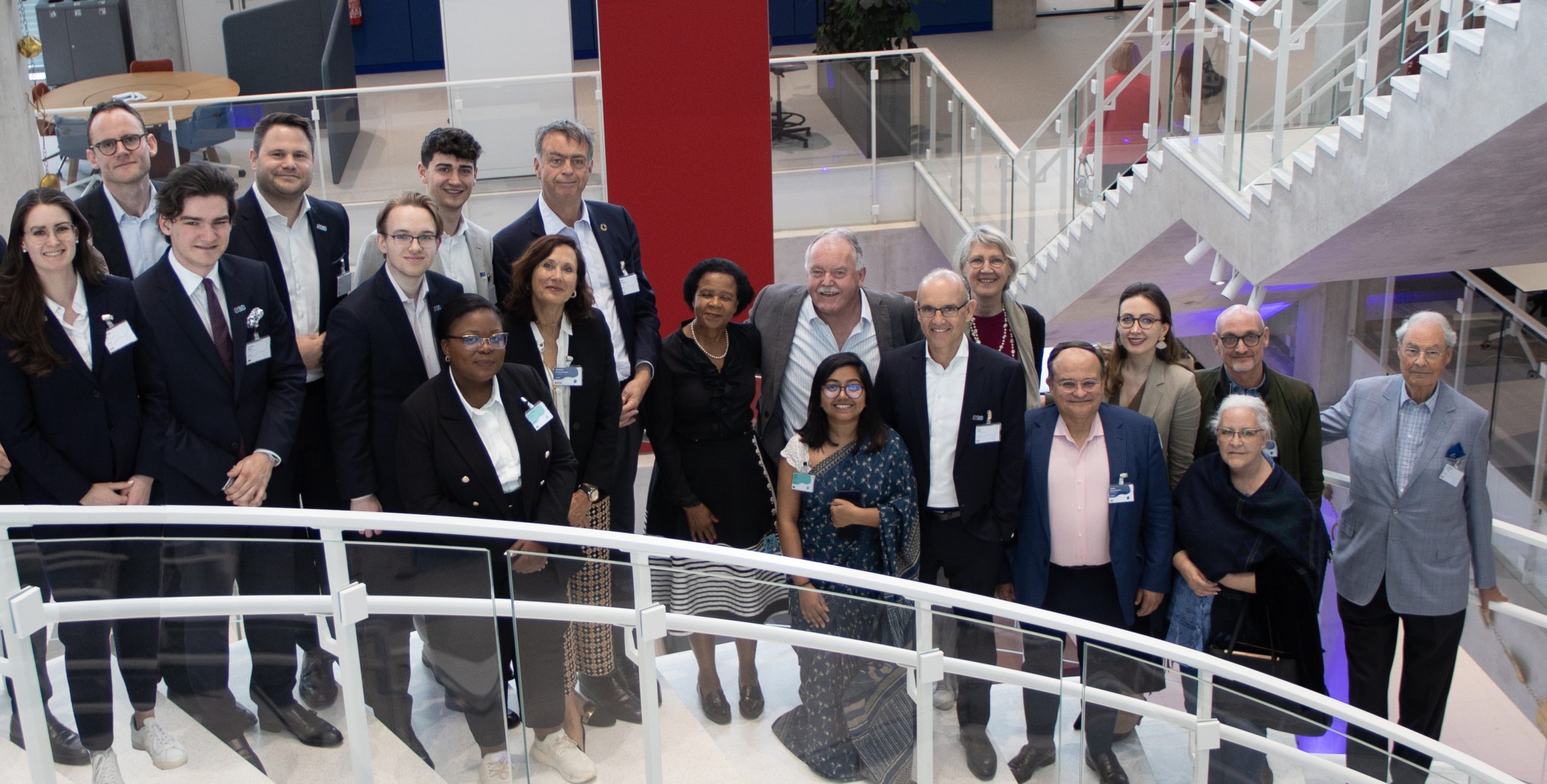
The St. Gallen Symposium has always been about intergenerational dialogue. However, naturally with intergenerational relations come expectations that different age-groups have of each other. With that we realised that things have not been working out they way that they should have and maybe it was time to define a new generational contract.” stated Maximilian Pefestorff, member of the International Student’s Council.
“The St. Gallen Symposium has always been about intergenerational dialogue. However, naturally with intergenerational relations come expectations that different age-groups have of each other. With that we realised that things have not been working out they way that they should have and maybe it was time to define a new generational contract.”
Maximilian Pefestorff, Member of the 52nd International Student’s Committee
The main theme of the 52nd St. Gallen Symposium deals with the concept of “a new generational contract”. Back in 2022 for the 50th anniversary of “The Limits to Growth” study, which was presented at the 3rd St. Gallen Symposium in 1972, the St. Gallen Symposium and the Club of Rome united again and launched the joint initiative of a new generational contract, which fosters cross-generational dialogue and encourage actions that put intergenerational fairness at the centre of today’s decision-making across all sectors (business, policy, economy, education, etc.) in order to tackle pressing issues of today.
Last year’s St. Gallen Symposium gave the mandate to take a year and develop a new generational contract. The project started with quantitative and qualitative global surveys that the St. Gallen Symposium and the Club of Rome conducted to collect voices, concerns, and perspectives from different generations. Also, a lot of research, papers and more than 1000 student essays were collected via the St. Gallen Symposium’s essay competition to gain important insights. The results were all synthesised and used to come up with seven interrelated principles (responsibility, care, voice, regeneration, openness, foresight and hindsight, and collaboration) of a new generational contract which helped to outline the idea of intergenerational relationships and commitment. Different workshops and projects were launched such as the Young Leaders on Board project, the International Skills Share Series, which emphasises systems-thinking or the Global Ranking of Intergenerational Fairness the Next-Gen Value Creation Barometer. Those are specific projects that try to put the new generational contract or at least the principles into practice.

This year’s Symposium is an invitation for others to think of projects that relate to the principles of the new generational contract. Further, it aims to bring this way of intergenerational thinking into other sectors. It is an open initiative that encourages others to collaborate, come on board, criticise, and bring in their own perspective.
Currently the world faces numerous long-term challenges that will severely impact future generations. The most urgent example of such a challenge is the climate crisis with its damaging consequences. However, there is a big challenge of being stuck in a permanent crisis mode due to events such as the Corona pandemic, the Russian invasion of the Ukraine and all the turmoil that came with it, which postpones deep and lasting long-term transformation because short-term crisis management takes precedence. This leads to a vicious cycle because changes which are urgently needed for the long-term are not prioritised and short-term crisis-management will only kick-off the next crisis which will create a negative legacy for coming generations.
Already in 1987, the United Nations Brundtland Commission defined sustainable development in a way that focuses on intergenerational solidarity: “development that meet the needs of the present without compromising the ability of future generation to meet their own need.” The definition emphasises the need for intergenerational relations and values such as mutual responsibility between generations. That is exactly the point where the concept of a new generational contract ties in because it emphasises intergenerational fairness when making decisions.
The “Limits to Growth” study in 1972 by the Club of Rome is a perfect example for the fact that knowledge usually doesn’t lead to early pre-emptive action. Intergenerational relations and the generational contract could potentially be a driver for motivation for an increased focus on long-term thinking. Usually, the future and respective concepts concerning the future such as sustainability are very abstract concepts which lead to a tendency to overlook or even forget long-term implications. However, future generations such as own future children or grandchildren give those abstract concepts a face. Hence, intergenerational solidarity could be a way of telling the story of sustainability and be a driver among younger and older generations for the motivation to finally focus on long-term transformation, which has been largely disregarded in today’s decision-making.
One has to be mindful of contextual differences and diversity when it comes to looking at generational relations. Maximilian Pefestorff mentioned a few limitations while developing the project such as the impossibility to encompass all the opinions and perspectives that were expressed. The concept of the new generational contract also links to the concept of a social contract which is a western philosophical idea in a way how society is tied together by mutual responsibilities.
When considering putting the new generational contract and its principles into action further limitations are evident: “[…] one must be mindful that it is an idea a vision, in the end it is not a contract in the legally binding sense. The extent by which it will be implemented or lived by depends on our ability to advocate and communicate, engage people in dialogue and induce mutual learning processes between generations but we don’t have the ability nor the aim of this being a legally binding concept.”, states Felix Rüdiger. Still the 52nd Symposium is supposed to be a sounding board for the new generational contract and promote it beyond the footstep of the St. Gallen Symposium.
“The responsibility that we not just have for ourselves or our families but for those yet to be born. We owe it to those because our ancestors gave us what we have for free.”
Mamphela Ramphele Co-President of the Club of Rome
“The key takeaway or the key point to remember is that we are one human family. […] The responsibility that we not just have for ourselves or our families but for those yet to be born. We owe it to those because our ancestors gave us what we have for free.”, comments Mamphela Ramphele Co-president of the Club of Rome. The statement summarises quite well what the new generational contract is about – fostering intergenerational relationships and sharing mutual responsibilities between generations. Hence, intergenerational solidarity becomes a means to tackle pressing issues of today.
As an outlook on the future of the project of the new generational contract the St. Gallen Symposium will definitely continue working with it. A long-term initiative with the Club of Rome and other partners has been set up which is larger than one Symposium, especially considering all the projects such as the Young Leaders on Board initiative or the Next-Gen Value creation. The research around the theme will be continued as well as the various projects. As mentioned before the Club of Rome and the Symposium have planned a set of programs to move the concept of a new generational contract beyond the stage of the St. Gallen Symposium. The programs focus on putting the seven interrelated principles into action. The Club of Rome will try to embed those seven principles into the work they’ve already been doing with young people. Further, it is very likely that the topic will stay relevant for the next Symposium whether it be in the form of a session giving updates on the programs or sharing further insights that have been gained. Next year’s Symposium will focus on a new topic, but the St. Gallen Symposium always aims for an intergenerational relevance and focus.


