56th St. Gallen Symposium 2027

Theme & Programme

The St. Gallen Symposium promotes cross-generational dialogue on the most pressing issues of our time. Every year, we focus our annual main symposium, our year-round dialogue initiatives and our publications on a core theme.

Conditional Partnerships: Theme of the 56th St. Gallen Symposium

The global system is entering a new phase. Competition is intensifying across markets, geopolitics and technology, while trust in rules, institutions and established alliances is eroding. As uncertainty grows, states, companies and societies alike are forced to take the initiative and reassess how they work together. Openness and interdependence alone no longer guarantee stability, and cooperation is increasingly shaped by strategic interest rather than by shared assumption. Alliances are being repriced, supply chains reorganised, and solidarity extended on narrower terms. Partnerships have not disappeared, but they are becoming more conditional, more transactional and more readily revised as circumstances shift.

The 56th St. Gallen Symposium will explore how partnerships can be shaped and used effectively under these more demanding conditions:

How can leaders turn growing conditionality into a source of resilience, growth and competitive advantage?
What makes partnerships thrive when access, trust and cooperation can no longer be taken for granted?

Deep dive into an age of conditional partnerships

States

  • For decades cooperation ran largely on trust, with the old order built on shared values and rules enforced by large global powers, now a chain of crises and the uncertainty that came with it has pushed states to ensure strategic autonomy and self reliance
  • Cooperation shifts from trust to explicit terms, giving rise to more transactional dynamics but also clearer, more deliberate partnerships
  • When existing partnerships become volatile, States are buying back their autonomy, rebuilding their own defense, energy, and supply chains after decades of outsourcing
  • States hedge through smaller, issue specific clubs and bilateral deals instead of relying on established institutions, gaining flexibility and ways to diversify risk at the cost of additional co-dependencies and tit-for-tat dynamics
  • For rising and middle powers in particular, selective partnerships can accelerate national development, expand access to investment and technology, and turn geopolitical competition into greater economic and political leverage.
  • Security turns conditional and countries are expected to invest to stay protected, as defense spending is surging across the EU, GCC, and rest of the world at scale

Business

  • Since the age of globalization, firms partnered largely on commercial logic, choosing the best mix of cost, capability and market access in a broadly open world
  • As states act on strategic autonomy and existing partnerships become volatile in an uncertain world, economic security becomes a priority and firms make partnerships conditional on resilience, proximity along commercial merit
  • Despite rising uncertainty, global trade is not slowing down, its just reorganizing around economic blocs
  • Competitive advantage increasingly lies in managing complexity, as firms that can navigate sanctions, export controls and fragmented regulatory regimes gain access to markets, capital and strategic partners that are to complex to navigate for others
  • AI is redrawing the rules of strategic partnership, as choosing the right operating model, use cases and technology partners becomes a condition for future success
  • Companies exposed to geopolitical risk, hedge against uncertainty by building redundancies and vertically integrating critical resources 
  • Access to capital, people and technology used to be largely a strategic choice, but is increasingly turning conditional as states mandate local production to access markets or restrict exports to rival economic blocs 

People

  • For decades societies leaned on a broad sense of shared belonging and a potentially different but net positive vision of the future taken for granted
  • rise in polarization alongside an increasing distrust in established institutions, undermining cooperation and partnerships across all forms of societal organization
  • Demographic aging is placing growing pressure on pension and healthcare systems, while AI is transforming entry-level jobs raising new questions about how young people gain experience, build careers and access the same opportunities their parents had, leading to a growing need for a new generational contract adapted to these conditions
  • Societies now welcome those who add value, as residency follows skills and what people contribute, reshaping how nations compete for talent and how the young earn their place
  • Advancement and the freedom to self-actualize is becoming more conditional, as careers and individual economic security increasingly depend on merit, performance and the ability to create value.
Rising uncertainty makes cooperation more necessary, but increasingly conditional.

Across states, business and individuals, cooperation is being rewritten by uncertainty. Trust is no longer a stable foundation that actors can assume, but a scarce resource that must be earned, tested and reinforced through clearer terms. States are rebuilding autonomy as crises expose their dependencies. Companies are redesigning partnerships around resilience, proximity and access, not only commercial merit. People are reassessing belonging, opportunity and contribution as institutions lose credibility and economic security becomes more conditional.

This does not mean the end of partnership. It means partnerships are evolving. In a world marked by volatility, polarisation and institutional distrust, actors still need one another more than ever, but they are less willing to rely on others without safeguards. Partnerships are becoming more deliberate, more selective and more reciprocal, shaped by what each side contributes, how risks are shared, and whether cooperation strengthens autonomy rather than undermines it.

Together, these shifts define an age of conditional partnerships, where cooperation remains essential but must now be justified. The central question is no longer simply who we partner with, but under what terms and with what dependencies.
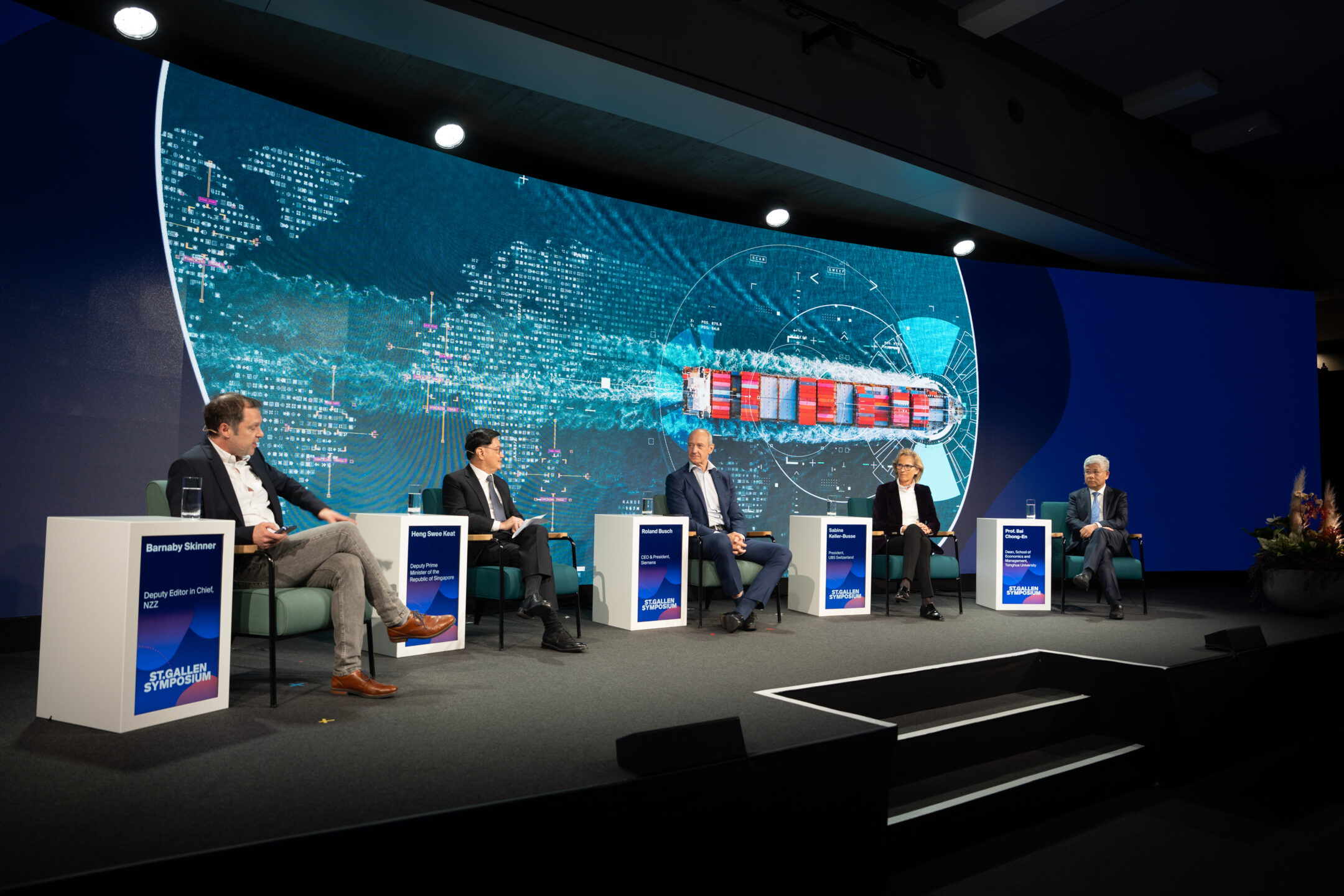
Programme of the 56th St. Gallen Symposium on
“Conditional Partnerships”

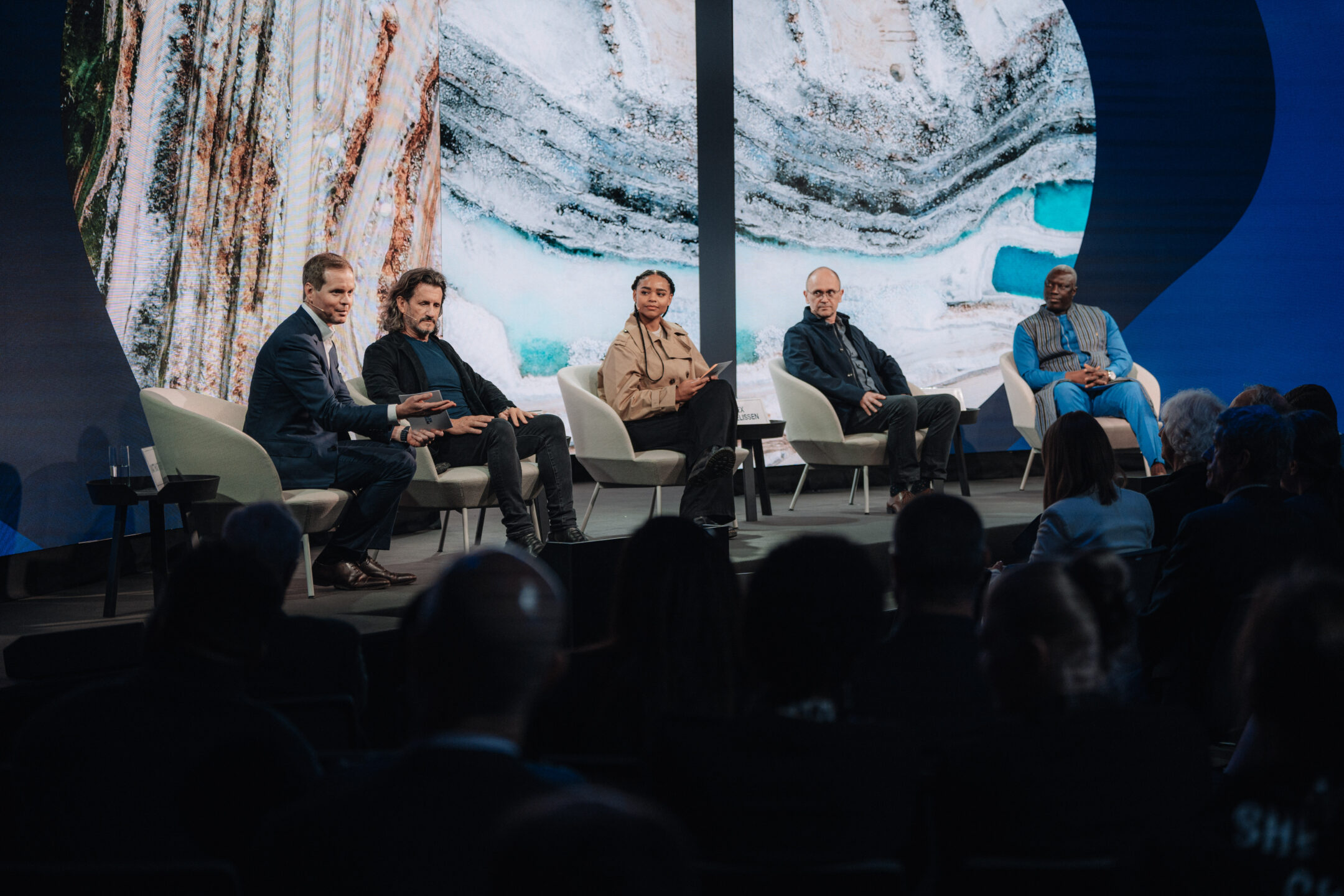
Speakers at the 56th St. Gallen Symposium on
“Conditional Partnerships”

Sources

  1. SIPRI, Trends in World Military Expenditure, 2025, April 2026.
  2. NATO, Defence investment and NATO’s 5% commitment.
  3. AGBI, Gulf defence spending expected to rise by 20%, April 2026.
  4. World Economic Forum, What is minilateralism and why does it matter in 2026?, January 2026.
  5. Carnegie Endowment for International Peace, The Middle Power Moment, January 2026.
  6. McKinsey Global Institute, Geopolitics and the geometry of global trade: 2026 update.
  7. World Trade Organization, Global Trade Outlook and Statistics, March 2026.
  8. Global Trade Alert, New Industrial Policy Observatory.
  9. Edelman, 2026 Edelman Trust Barometer, January 2026.
  10. Federal Reserve Bank of Dallas, Young workers’ employment drops in occupations with high AI exposure, January 2026.
  11. OECD, Rapidly ageing populations will continue to put pressure on pension systems, November 2025.
  12. OECD, International Migration Outlook 2025, November 2025.